Guide/Report
Strengthening Kinship Support Through Area Agencies on Aging
Download This Resource

Introduction
Kinship families (also known as grandfamilies) form when grandparents, other relatives, or close family friends step in to raise children whose parents are unable to do so. While research shows that both kin caregivers and children benefit from being in these families, studies also indicate that these families are disproportionately impacted by financial challenges, disability, and trauma and that the well-being of all family members improves when they receive appropriate services.
Area Agencies on Aging (AAAs) provide a wide range of supportive services for older adults nationwide, including nutrition programs, family caregiver services, and transportation. Most also support older kin caregivers and the children they raise.
Using data collected from USAging’s 2025 nationally representative survey of AAAs, this report summarizes the types of services AAAs offer to kinship families and their top challenges in doing so. It also highlights how the federally funded Grandfamilies & Kinship Support Network: A National Technical Assistance Center (Network)—of which USAging is a proud managing partner—can help AAAs and other organizations tackle these challenges, create new services for kin caregivers, expand and enhance existing services, and expand cross-system collaboration to reduce silos in care. The report additionally includes an example of technical assistance one AAA received from the Network.
This report uses data collected from USAging’s 2025 Chartbook, AAAs Respond to Complex Community Needs: Trends and New Directions From the National Survey of Area Agencies on Aging. The web-based survey, funded with a grant from the U.S. Administration for Community Living (ACL), was launched in March 2025 and disseminated to all 613 AAAs. Data collection concluded at the end of April 2025, with 72% (n=444) of AAAs responding.
Most AAAs Support Older Kin Caregivers
95% of AAAs offer services to older kin caregivers
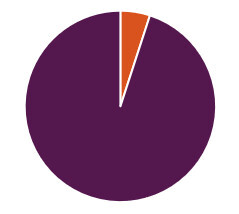
5% of AAAs do not offer services to older kin caregivers
According to the survey, 95% of AAAs offer at least one service to older kin caregivers, and 38% serve kin caregivers of all ages.
AAAs Provide Services Needed by Kin Caregivers
In its 2021 State of Grandfamilies report, Generations United identified 11 “key services and supports” needed by kinship families. These include information and assistance in navigating and accessing available services, caregiver training or education, respite, financial assistance, and support groups. When asked about the services they provide to older kin caregivers, AAAs report offering many of these key services.
| Kin Caregiver Services Provided by AAAs | % of AAAs |
| Information & Referral | 69% |
| Assistance Accessing Services | 54% |
| Training/Education | 52% |
| Respite | 45% |
| Support Groups | 44% |
| Caregiver Counseling | 41% |
| Legal Services | 37% |
Another 42% offer supplemental services for kinship families, including financial assistance and in-kind support.
The Network offers many no-cost resources for AAAs and other organizations wishing to start new kin caregiver services, including:
- Starting a Kin Caregiver Support Service: Learning Community Insights Toolkit
- Toolkit for Starting a Kin Caregiver Respite Program
- Grandfamily Support Groups: Seven Tips for Getting Started and its accompanying recorded webinar
AAAs Support Children from Kinship Families
In addition to supporting kin caregivers, many AAAs administer programs for the children from kinship families.
| Services Provided by AAAs for Children from Kinship Families | % of AAAs |
| Any Children’s Service | 44% |
| Long-Term Services and Supports Assessments | 27% |
| Case Management | 18% |
| Care Transition Services | 9% |
| Evidence-Based Health and Wellness | 6% |
| In-Home Services | 6% |
| Nutrition Services | 4% |
Some AAAs also help with school supplies, clothing, child care, and mental health services for the children from kinship families.
Read how one AAA, Direction Home of Eastern Ohio, works with partners to run a summer camp for children from kinship families to provide respite for kin caregivers.
Top Challenges AAAs Face in Supporting Kin Caregivers…
AAAs were asked about their challenges in supporting kin caregivers and their families. Their top responses appear below.
- Limited funding
- Kinship families don’t know about us
- Outreach—difficulty identifying kinship families
- Not enough staff to support kin caregivers
- Helping kin caregivers navigate the educational system (including school enrollment, school-based nutrition benefits, immunization requirements, etc.)
- Agency is focused on other priority populations
- Lack of child care when caregivers are receiving AAA services
- Lack of transportation services
- Caregiver distrust or fear of the system
…and Information & Tools to Help Address Them
The Network offers many no-cost resources to help AAAs and other organizations overcome these challenges, including:
- Funding Kinship Services: A Primer on Federal Funding Sources, and its accompanying recorded webinar, Funding Kinship Programs and Services: Tips & Resources
- An Outreach Learning Community Toolkit, and its accompanying recorded webinar, Improving Outreach to Kinship Families
- Tip sheets on Supporting Educational Access for Kinship/Grandfamilies, Finding and Paying for Child Care, and Overcoming Barriers to Connecting with Kinship Families
- A Kinship Matters to Child Welfare pamphlet and Get Food Help
- GrandFacts – fact sheets for all 50 states, several Tribes, the District of Columbia, Puerto Rico, and the U.S. Virgin Islands, all providing information about local supports
- Pathways to Partnerships, Lessons from the Field: Leveraging Partnerships to Address Staff and Infrastructure Needs and Extend Reach, and Aging Network and Child Welfare Collaborations to Support Kinship/Grandfamilies (recorded webinar)
- Lessons from the Field: Overcoming Transportation Barriers in Supporting Kinship/Grandfamilies
Technical Assistance Example
Recognizing that AAAs can best serve kinship families by working in partnership with other local agencies and organizations, the County of San Diego Health and Human Services Agency (HHSA), Aging & Independence Services (AIS)—San Diego’s AAA—joined in an application for a unique cross-system technical assistance opportunity from the Network. Led by HHSA’s Department of Strategy and Community Engagement, and alongside HHSA’s Child and Family Well-Being Department and the YMCA of San Diego County, AIS has actively participated in the Network’s two-year Bridging Systems for Kinship Families project. The project has focused on improving collaboration across government systems and community-based service providers, all to better serve kinship families.
The Network has helped the County’s agencies and community-based organizations to pursue their kinship goals, gathering all participants for monthly virtual meetings to keep the whole group engaged and on schedule. The workgroup includes representatives from the four agencies that participated in the application, other County agencies (such as the County Office of Education) and community-based organizations, and two kin caregivers. Together, the Network and the workgroup developed an action plan with four formalized and shared goals:
- Create Streamlined Virtual Support: Enhance and coordinate a mobile-friendly website hub for kin caregivers.
- Offer Peer Mentorship: Launch a pilot program to pair new kin caregivers who are not involved with the foster care system with experienced mentors.
- Engage in Community Education: Implement a public awareness and education campaign to strengthen community support.
- Plan for Continuity: Develop a three-year sustainability plan and transition this workgroup into a permanent Kinship Task Force.
To accomplish the goal of creating streamlined virtual support, the workgroup designed a new, mobile-friendly kinship page on the County’s Live Well San Diego website. The page centralizes the County’s kinship resources in one place. Materials included on that page support the community education goal, as well. For that goal, the Network helped the workgroup to develop a Kinship Promotion Campaign Toolkit, including an awareness-raising two-minute video and a Kinship Road Map (translated into eight languages) that guides new kin caregivers in taking their first steps after assuming responsibility for their kin children. The group also created an hour-long presentation about kinship families in San Diego. Through a form in the Toolkit, any agency, organization, or group in the County wanting to know more about the families and how to best serve them can request a presentation, whether for a private meeting or a community event. While the goal of creating a pilot peer mentoring program has not yet been realized, the Network is continuing to assist the workgroup in pursing funding sources that could launch the program. Continuity planning is ongoing.
The Network offers no-cost, one-on-one technical assistance for both big and small endeavors, customizing its technical assistance to the needs and goals of each organization or team of organizations seeking support. For example, within the Aging Network, the Network has:
- Consulted with sixteen AAAs, two state units on aging, and one Title VI Native American Aging Program (Title VI program) on starting new kin caregiver services;
- Helped five AAAs, one Title VI program, and one state unit on aging to identify foundation and corporate grants that could support their kinship services;
- Assisted fifteen AAAs in exploring how partnerships could increase their organizational capacity;
- Educated two AAAs, one state unit on aging, one national call center, and one Adult Protective Services agency on finding local kinship service providers or navigating support systems that were not their own; and
- Assisted a federal agency with data and other research support.
Click this link to request no-cost technical assistance from the Network.
Conclusion
AAAs work hard to support kin caregivers and the children they raise. Even so, many face challenges in offering this assistance. Fortunately, support from the Network has helped numerous AAAs and other government agencies and community-based organizations overcome these challenges and improve support for kinship families.
- Consulted with sixteen AAAs, two state units on aging, and one Title VI Native American Aging Program (Title VI program) on starting new kin caregiver services;
- Helped five AAAs, one Title VI program, and one state unit on aging to identify foundation and corporate grants that could support their kinship services;
- Assisted fifteen AAAs in exploring how partnerships could increase their organizational capacity;
- Educated two AAAs, one state unit on aging, one national call center, and one Adult Protective Services agency on finding local kinship service providers or navigating support systems that were not their own; and
- Assisted a federal agency with data and other research support.