Let’s Celebrate National Kinship Care Month!


Celebrating Grandfamilies & Kinship Care
Across the country, communities are raising awareness about both the strengths and unique needs of kinship families.
To help you take part, the Grandfamilies & Kinship Support Network at Generations United has created this toolkit with customizable resources to support your outreach. Use it to amplify and celebrate the impact of kinship care and spark conversations in your community.
Use the links below to jump to a resource section.
- Key Messages
- Social Media Resources
- Newsletters
- Email signatures
- Videos
- Fact Sheets, Data, and Research
- Infographics
- Outreach brochures
- Zoom Backgrounds
Key Messages
Please use this messaging in your written communications to support consistency and collaboration in our awareness efforts.
About 2.5 million children in the U.S. are growing up in kinship families.
Kids in kinship families are being raised by grandparents, other relatives, or close family friends. These families keep children safe and loved, yet often go unseen and unsupported.
Research is clear: when children can’t stay with their parents, they do best with relatives.
Kinship families offer greater stability and permanency, stronger connections to cultural identity, better mental health and behavioral outcomes, and deeper community links than non-kin foster families.
Kin caregivers face unique challenges.
Unlike parents, they do not have automatic legal rights—and they often step in unexpectedly, during a crisis, to raise a child they did not plan for.
Kinship families are strong—but systems weren’t built with them in mind.
Too often, caregivers face barriers enrolling kids in school, accessing healthcare, or securing stable housing. It’s inequitable and unjust. It’s time to redesign systems to recognize, respect, and support kinship families.
Social Media Resources
Throughout September, use and follow #KinshipCareMonth to join the national conversation. This hashtag connects everyone using the toolkit and highlights our collective impact in raising awareness about kinship families.
Of course, please share content of your organization’s choice. If you need social media posts, simply copy and paste the ones on the following pages. We’ve also included graphics to download for Instagram, Facebook, LinkedIn, and X.
Celebrating National Kinship Care Month
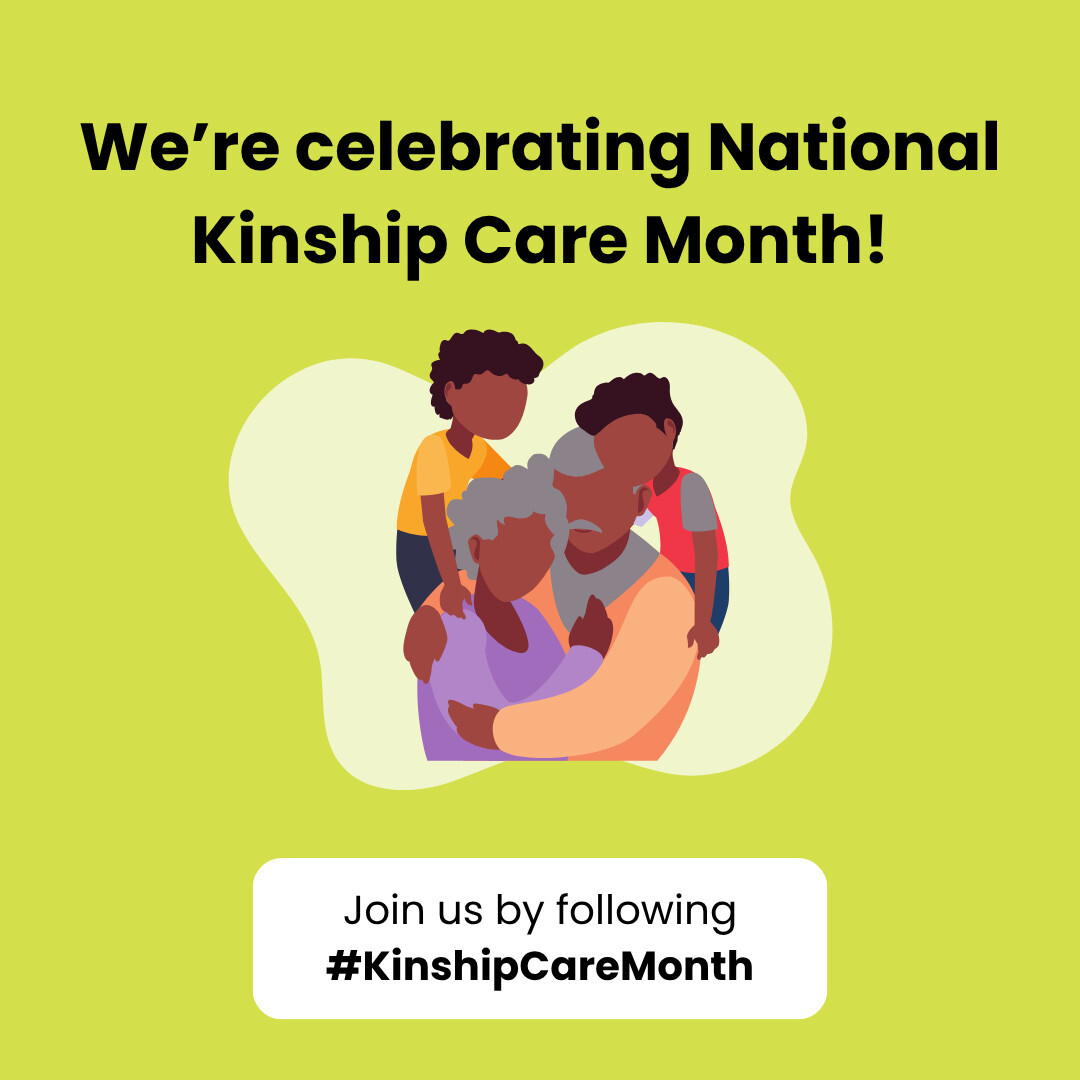
Caption for Facebook, LinkedIn, and Instagram:
September is National Kinship Care Month! 🎉 Help us honor the grandparents, other relatives, and close family friends stepping up to raise children whose parents cannot. Explore the toolkit and join the celebration:
gksnetwork.org/kinship-month-2026
#KinshipCareMonth
Caption for X:
🎉 September is #KinshipCareMonth!
Let’s celebrate the grandparents, other relatives, & family friends who are stepping up to raise kids. 💜
Explore the toolkit & join the movement: gksnetwork.org/kinship-month-2026
Download and Post the Graphic:
Suggested Timing:
- First week of September
Understanding the Scope and Scale of Kinship Care
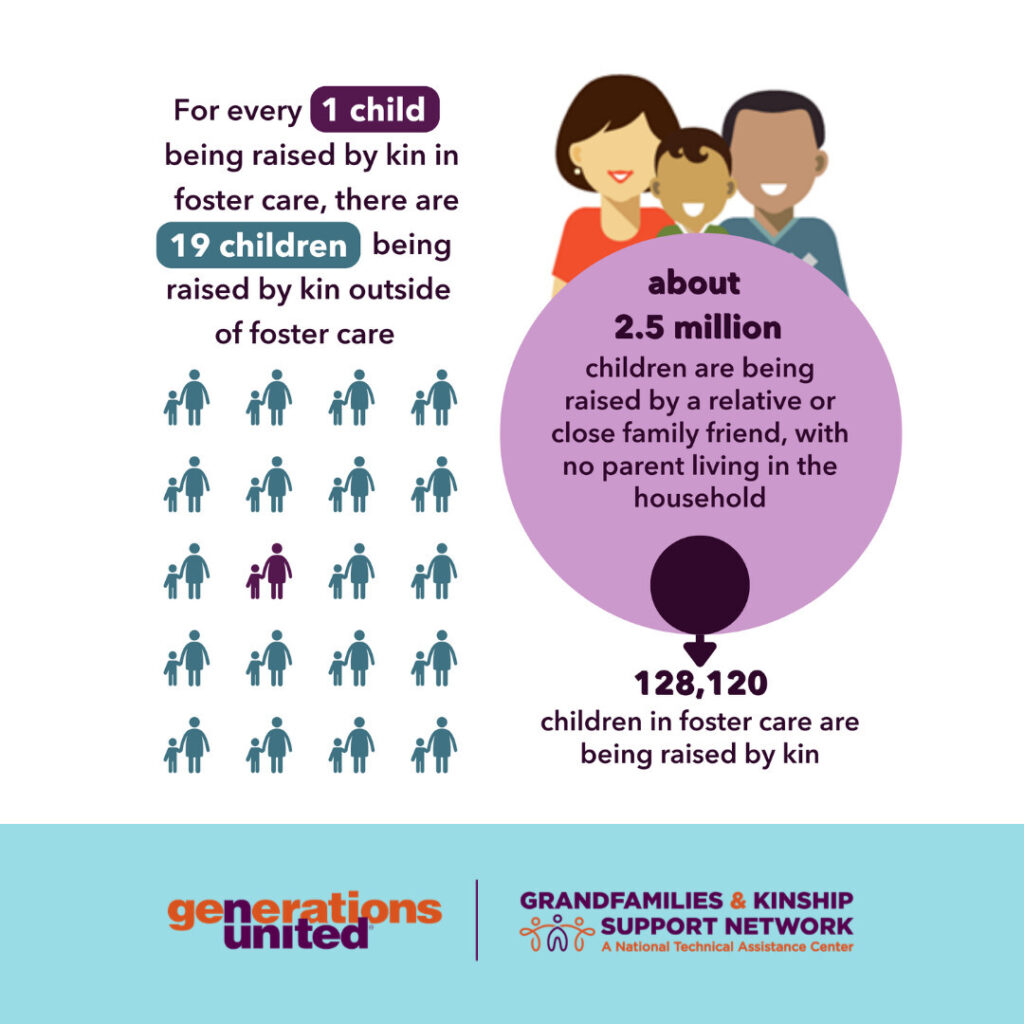
Caption for Facebook, LinkedIn, Instagram:
Did you know? About 2.5 million children in the U.S. are growing up in kinship families—being raised by grandparents, other relatives, or close family friends. These families keep children safe and loved, yet often go unseen and unsupported.
This #KinshipCareMonth, we’re raising awareness and recommitting to listen, uplift, and work with kinship families all year long. 💜
#KinshipCareMonth
Caption for X:
👵🏽👨🏿🦱 Did you know 2.5M kids in the U.S. are raised in #KinshipCare by grandparents, other relatives, or family friends?
These families keep children safe & loved—but often lack support.
This #KinshipCareMonth, we’re listening to, uplifting, and standing with them. 💜
Download and Post the Graphic:
Suggested Timing:
- Early September
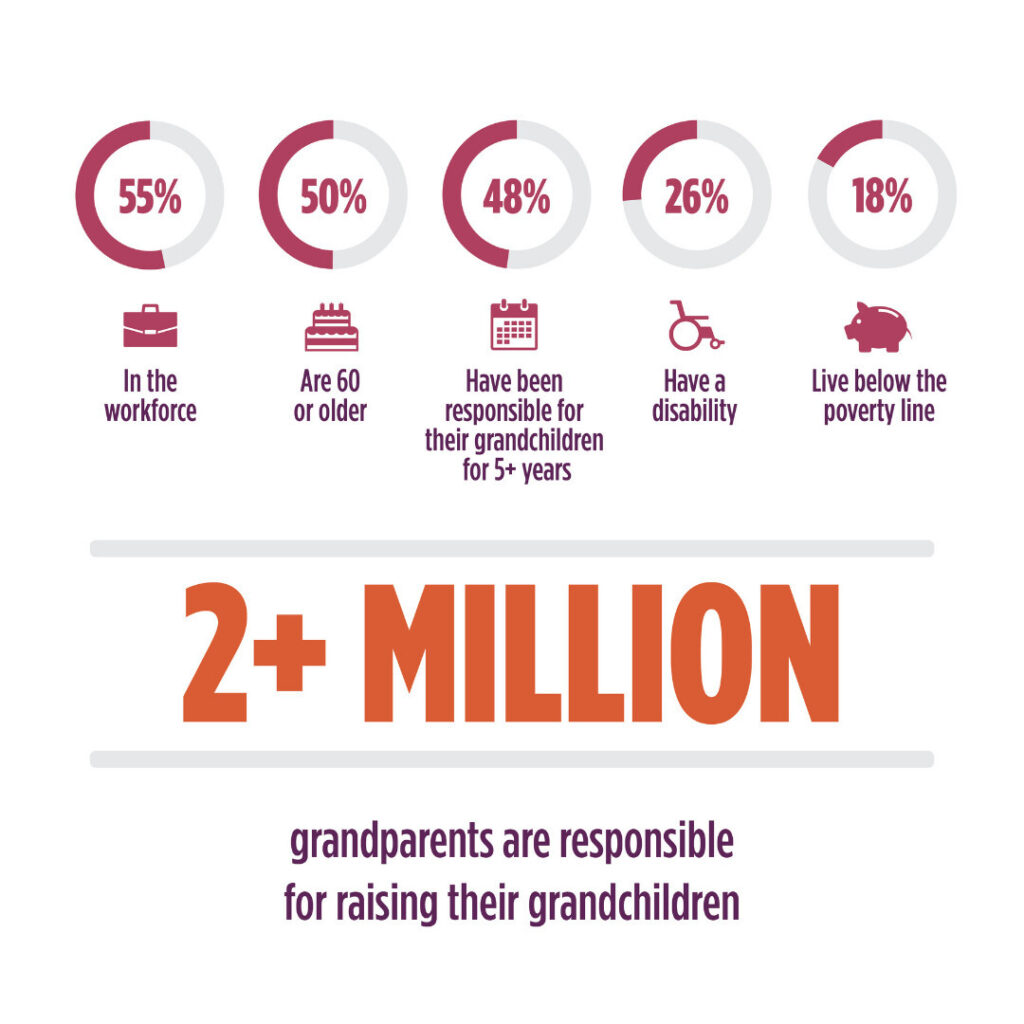
Caption for Facebook, LinkedIn, Instagram:
Did you know? More than 2M grandparents are raising their grandchildren.
They are keeping kids safe and loved, yet these grandparents often go unseen and unsupported — despite having unique needs of their own.
We see them, and we’re listening. By working alongside grandparents who are kin caregivers, we can better support them and their families. 💜
#KinshipCareMonth #Grandfamilies
Caption for X:
👵🏽👨🏿🦱 Did you know more than 2M grandparents are raising their grandkids?
These kin caregivers keep children safe and loved—but often lack support, despite having needs of their own.
We’re committed to listening to and standing with kin caregivers. 💜
#KinshipCareMonth #Grandfamilies
Download and Post the Graphic:
Suggested Timing:
Anytime
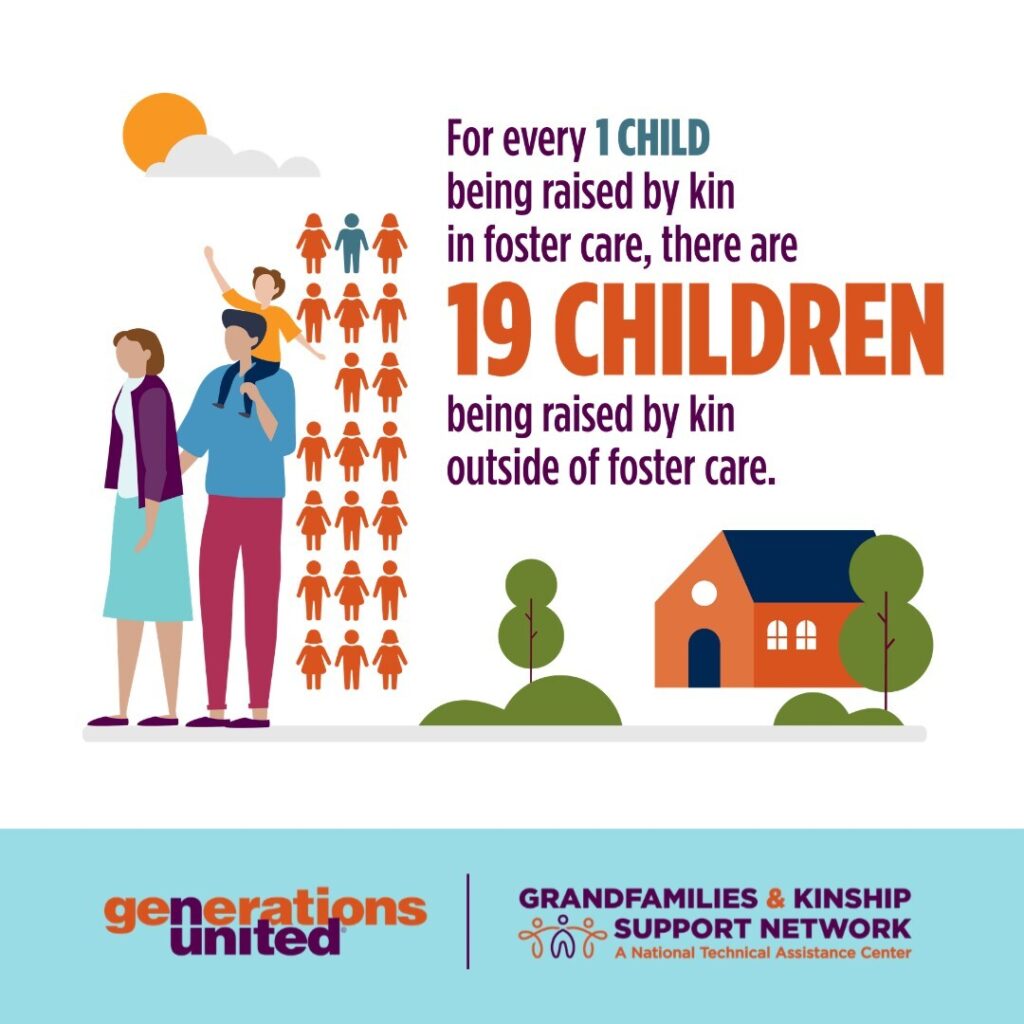
Caption for Facebook, LinkedIn, Instagram:
Did you know? For every child raised by kin in foster care, 19 more are raised by relatives outside the system.
Why does this matter? Because most kinship families are navigating caregiving without access to foster care supports.
When families lack support, they can feel isolated and unseen — even when they simply need help enrolling a child in school or accessing food, housing, child care, transportation, or health care. Families deserve support without being forced into foster care to receive it.
#KinshipCareMonth #Grandfamilies
Caption for X:
For every 1 child raised by kin in foster care, 19 are raised by kin outside the system. These families often feel invisible.
Kin caregivers take on a huge responsibility. We should help ensure they have resources to meet children’s needs in return.
#KinshipCareMonth #Grandfamilies
Download and Post the Graphic:
Suggested Timing:
- Anytime
Challenges Faced by Kin Caregivers
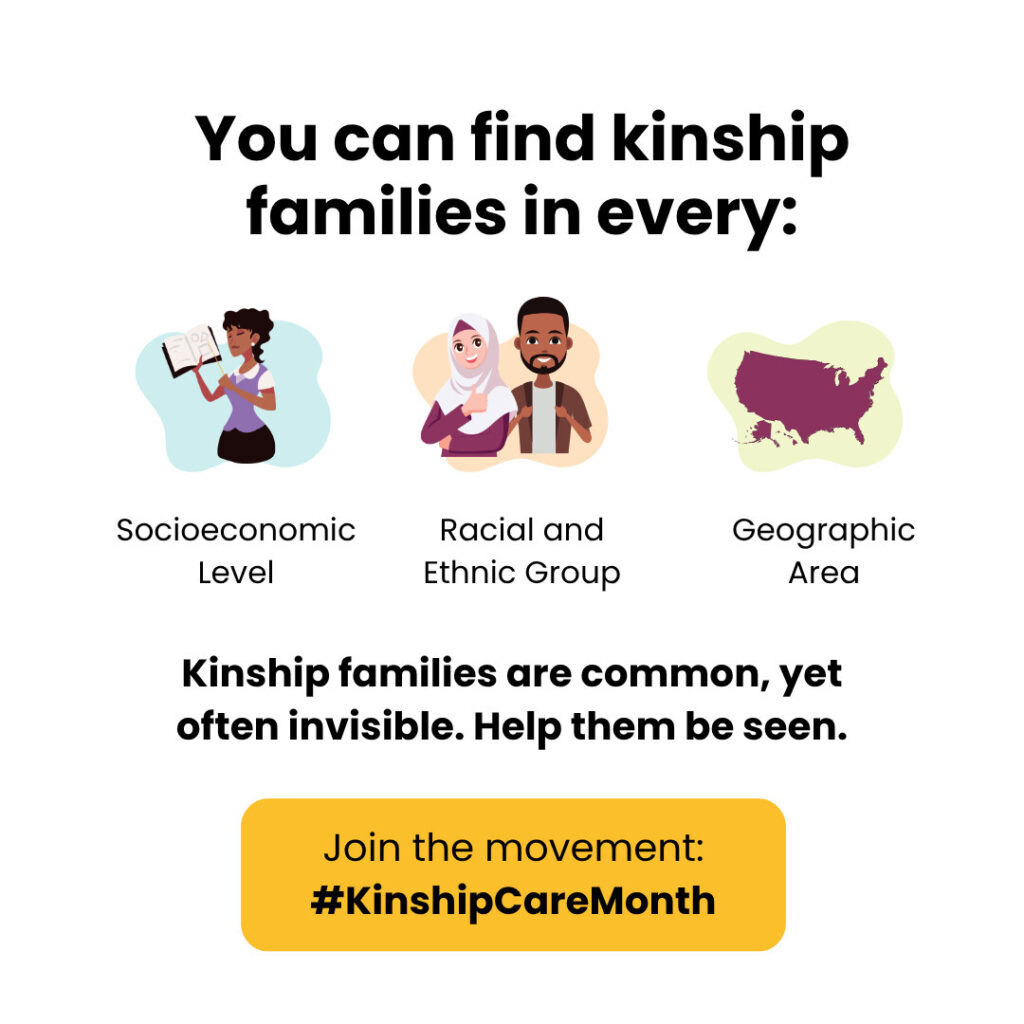
Caption for Facebook, LinkedIn, Instagram:
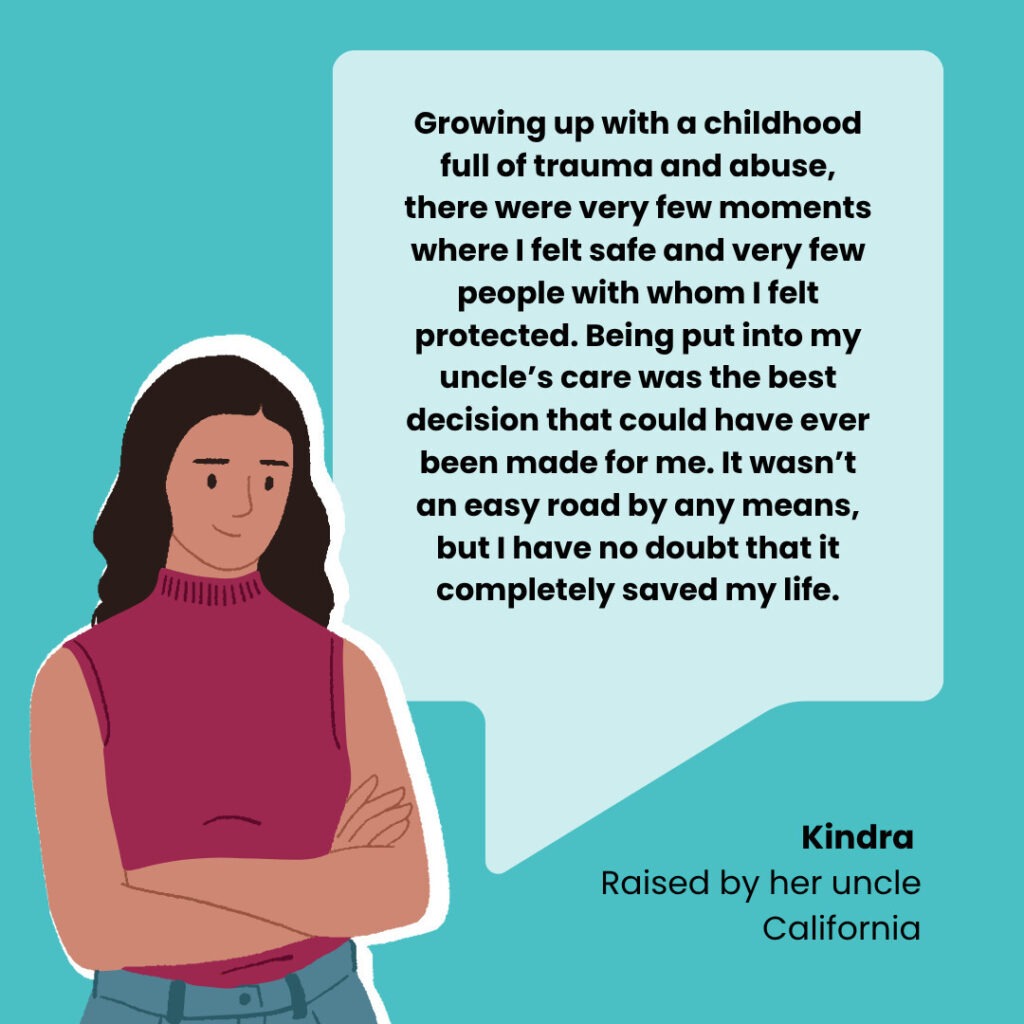
Kin caregivers face unique challenges.
Unlike parents, they don’t have automatic legal rights—and they often step in unexpectedly, during a crisis, to raise a child they didn’t plan for.
They show up anyway. Let’s show up for them. 💜
#KinshipCareMonth
Caption for X:
Unlike parents, kin caregivers don’t have automatic legal rights.
Most didn’t plan for this – they step in during crises, often overnight.
They show up. Let’s show up for them. 💜
#KinshipCareMonth
Download and Post the Graphic:
Suggested Timing:
- Anytime
The Proven Benefits of Kinship Care
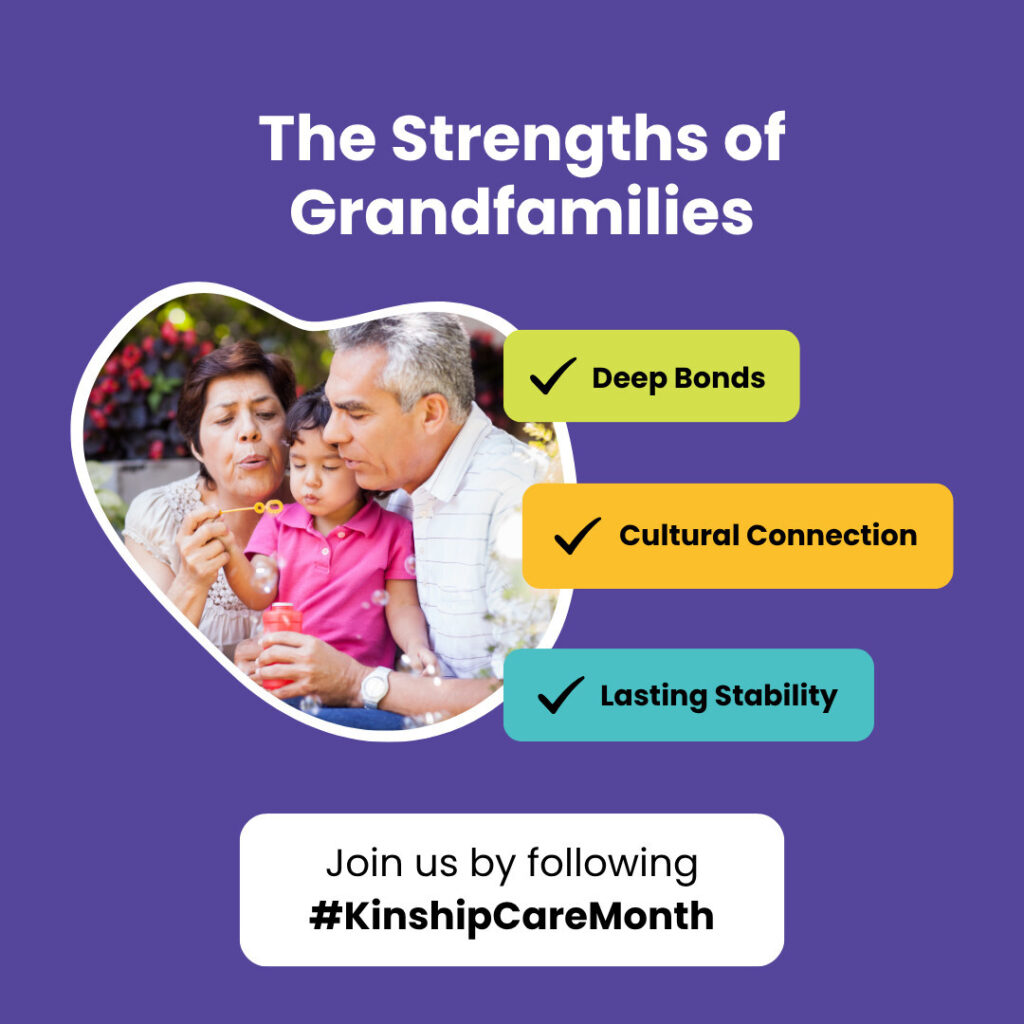
Caption for Facebook, LinkedIn, Instagram:
💜 Kinship families have powerful strengths. Their deep bonds, cultural ties, and resilience help children feel safe, stable, and seen.
With the right support, kin caregivers raise children with better mental health outcomes, stronger senses of identity, and lasting feelings of belonging – outcomes that outpace those of children placed in non-kin foster homes.
#KinshipCareMonth
Caption for X:
Kinship families have powerful strengths. 💜
Their deep bonds help children feel safe, stable, & seen.
With the right support, they foster better mental health, stronger identity, & more lasting belonging than non-kin foster families.
#KinshipCareMonth
Download and Post the Graphic:
Suggested Timing:
- Anytime
Research-Backed Benefits of Kinship Care
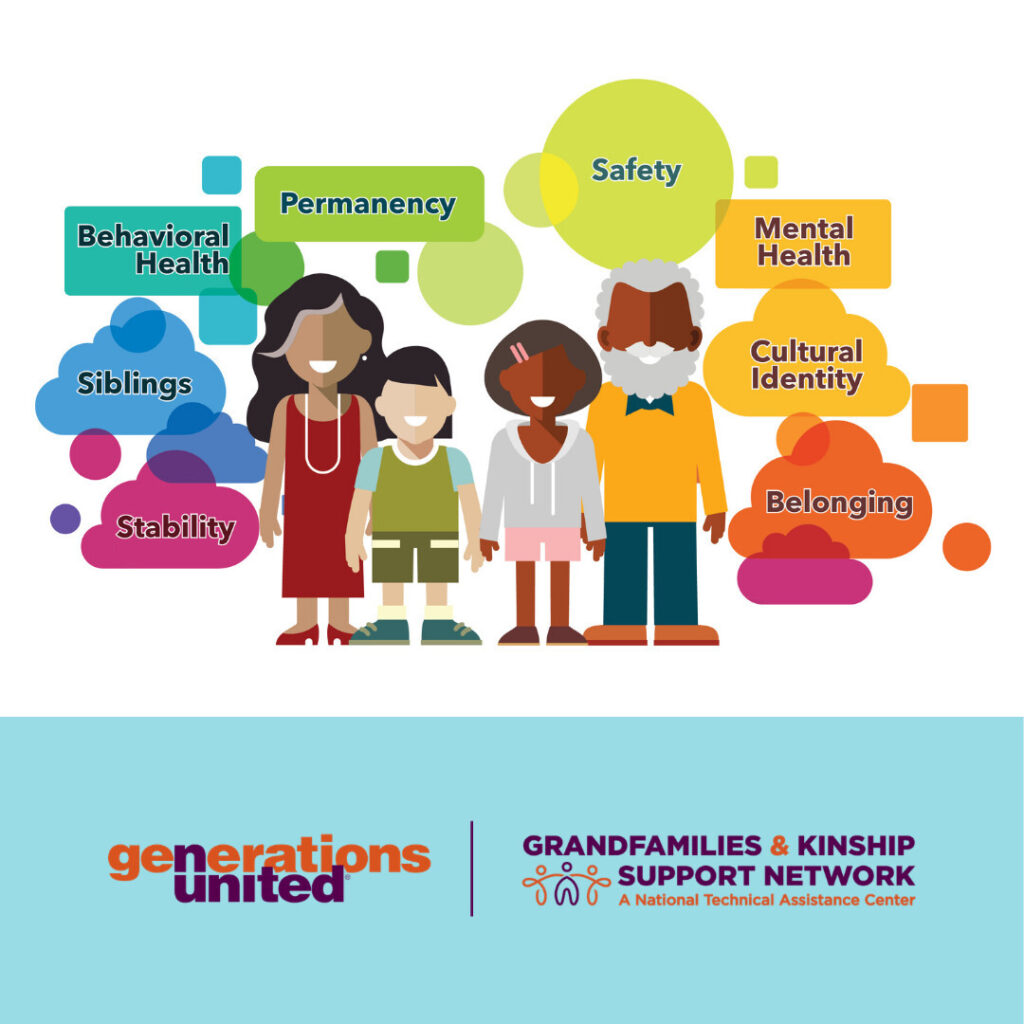
Caption for Facebook, LinkedIn, Instagram:
📊 Research is clear: when children can’t stay with their parents, they do best with kin.
Kinship families offer:
✅ Stability & permanency
✅ Cultural identity
✅ Resilient mental health and behavioral outcomes
✅ Community connections
#KinshipCareMonth
Caption for X:
When kids cannot live with their parents, they thrive with kin.
Kinship families = stability, safety, identity, & belonging. The research backs it. 💜
#KinshipCareMonth
Download and Post the Graphic:
Suggested Timing:
- Anytime
Economic Value of Kinship Care
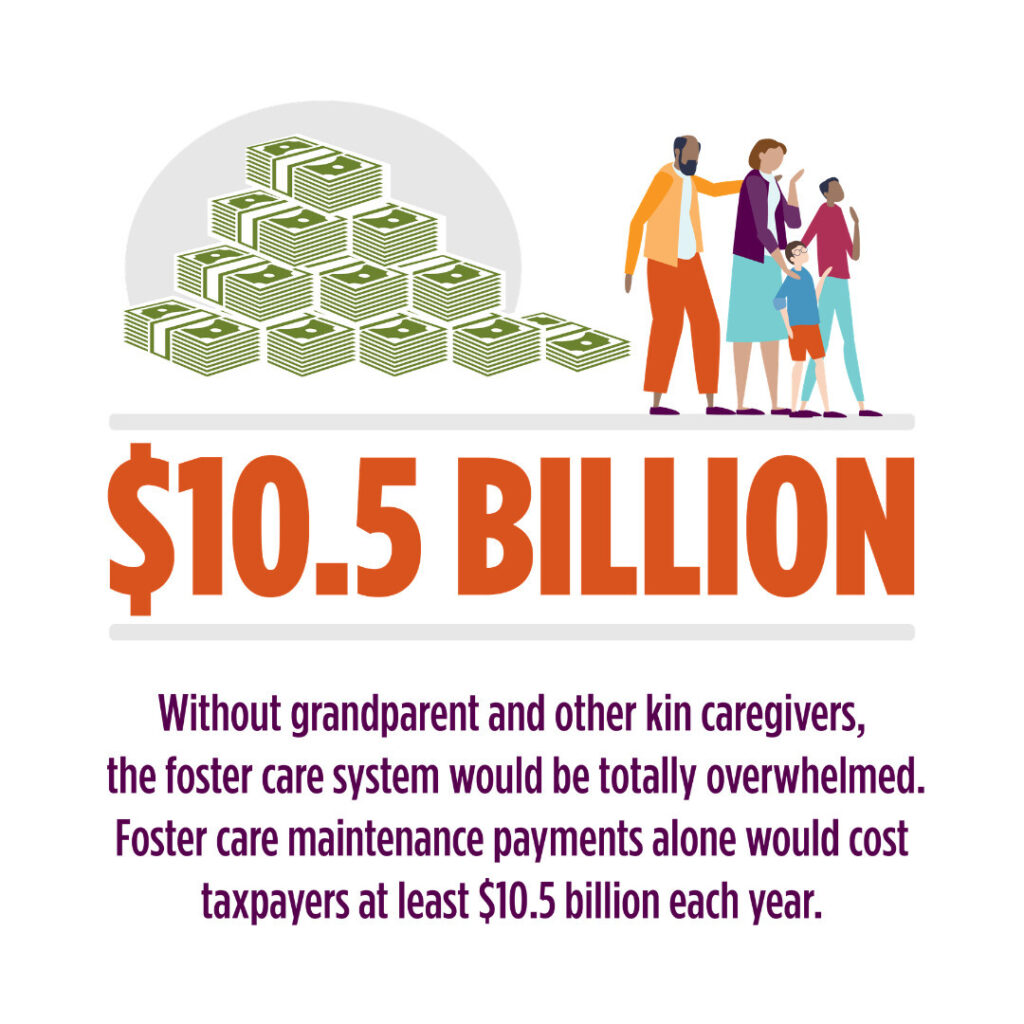
Caption for Facebook, LinkedIn, Instagram:
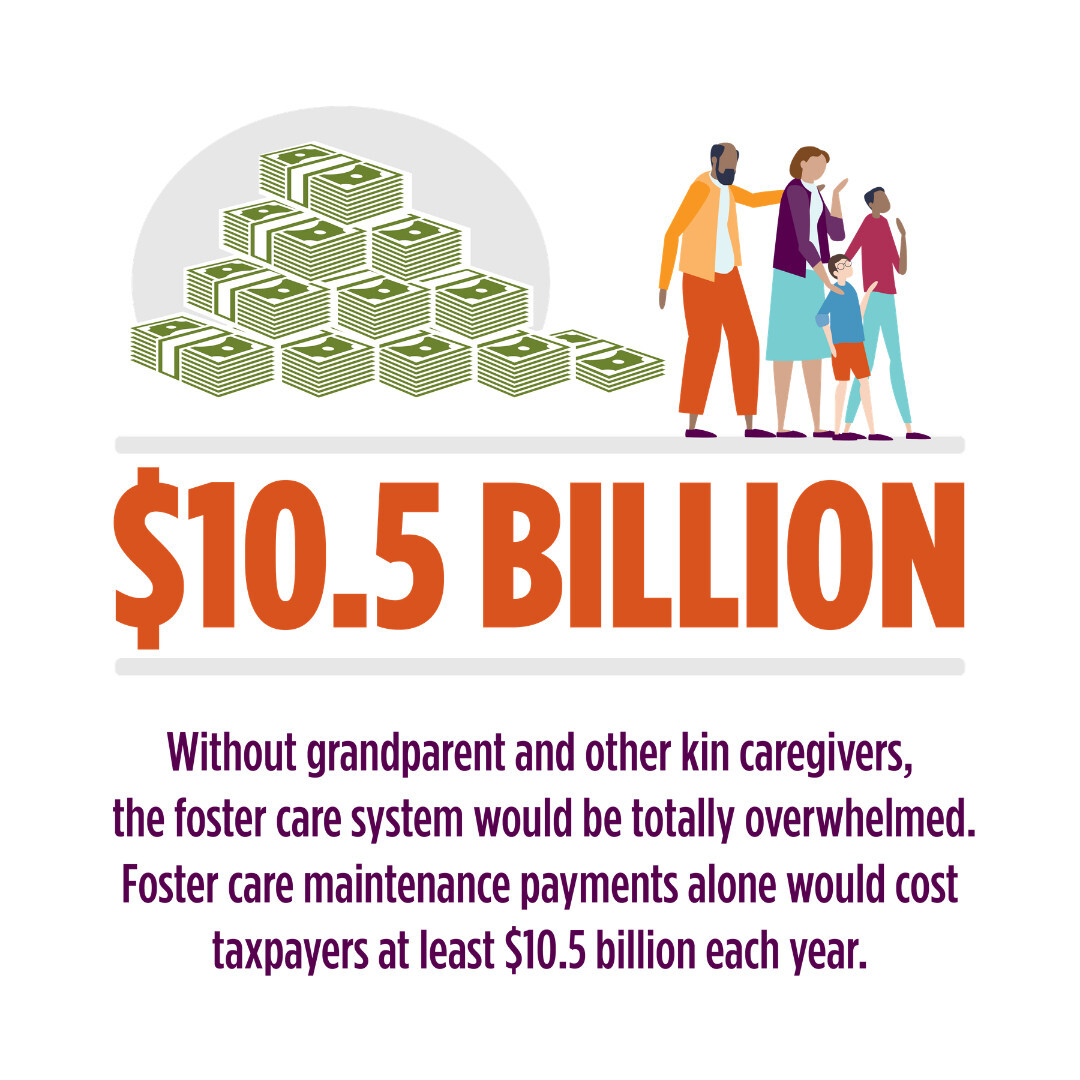
Kin caregivers save taxpayers $10.5 billion every year by keeping children safe, loved, and with family. Without them, our foster care system would be completely overwhelmed.
But these caregivers take on this responsibility at great personal cost.
Many live on fixed incomes and step in with little warning to care for children who have experienced trauma, parental opioid and substance use, or loss. They stretch every dollar to provide stability — yet most receive little to no support.
Kin caregivers already do so much. Children should not have to enter foster care just to access basic services.
It’s time we show up for the caregivers who show up for our kids.
#KinshipCareMonth #Grandfamilies
Caption for X:
Kin caregivers save taxpayers $10.5B/yr by keeping kids with family. Without them, foster care would be overwhelmed.
These caregivers take on this responsibility at a personal cost. It’s time we show up for the caregivers who show up for our kids.
#KinshipCareMonth #Grandfamilies
Download and Post the Graphic:
Suggested Timing:
- Anytime
Sharing Personal Kinship Experiences
Caption for Facebook, LinkedIn, Instagram:
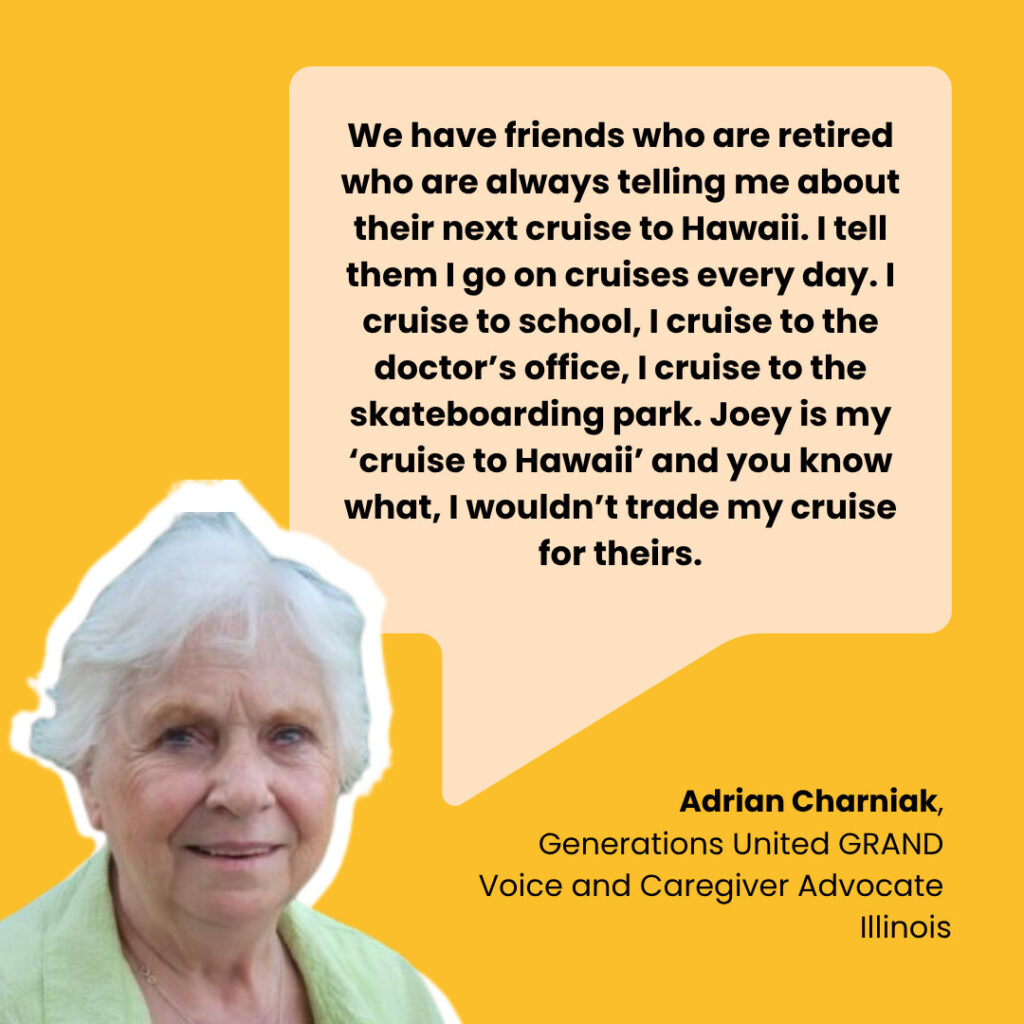
💬 “I didn’t plan to raise my grandchild, but I wouldn’t change it for the world.”
So many families are formed by love, not legal titles. Were you raised by a grandparent, other relative, or close family friend—or are you raising a child that way now?
We’d love to hear your story. Tell us about it in the comments below. 💜
#KinshipCareMonth
Caption for X:
💬 “I didn’t plan to raise my grandchild, but I wouldn’t change it for the world.” Families are built by love, not legal titles.
Were you raised by kin? Or are you raising a child that way now? Share your story below. 💜
#KinshipCareMonth
Download and Post the Graphic:
Suggested Timing:
- Anytime
Kinship Stories: Stepping Up in Crisis
Caption for Facebook, LinkedIn, Instagram:
Kinship families form in moments of crisis.
When parents are unable to care for their children—due to death, incarceration, substance use disorder, serious illness, deportation, or deployment—grandparents, other relatives, and close family friends step in to keep families together. 💜
#KinshipCareMonth
Caption for X:
Kinship families form in times of parental crisis—
🕊️ Death
🤒 Serious Illness
🚔 Incarceration
🎖️ Deployment
🌍 Deportation
When relatives step in, families stay together. 💜
#KinshipCareMonth
Download and Post the Graphic:
Suggested Timing:
- Anytime
Advocating for Systemic Support for Kinship Families
Caption for Facebook, LinkedIn, Instagram:
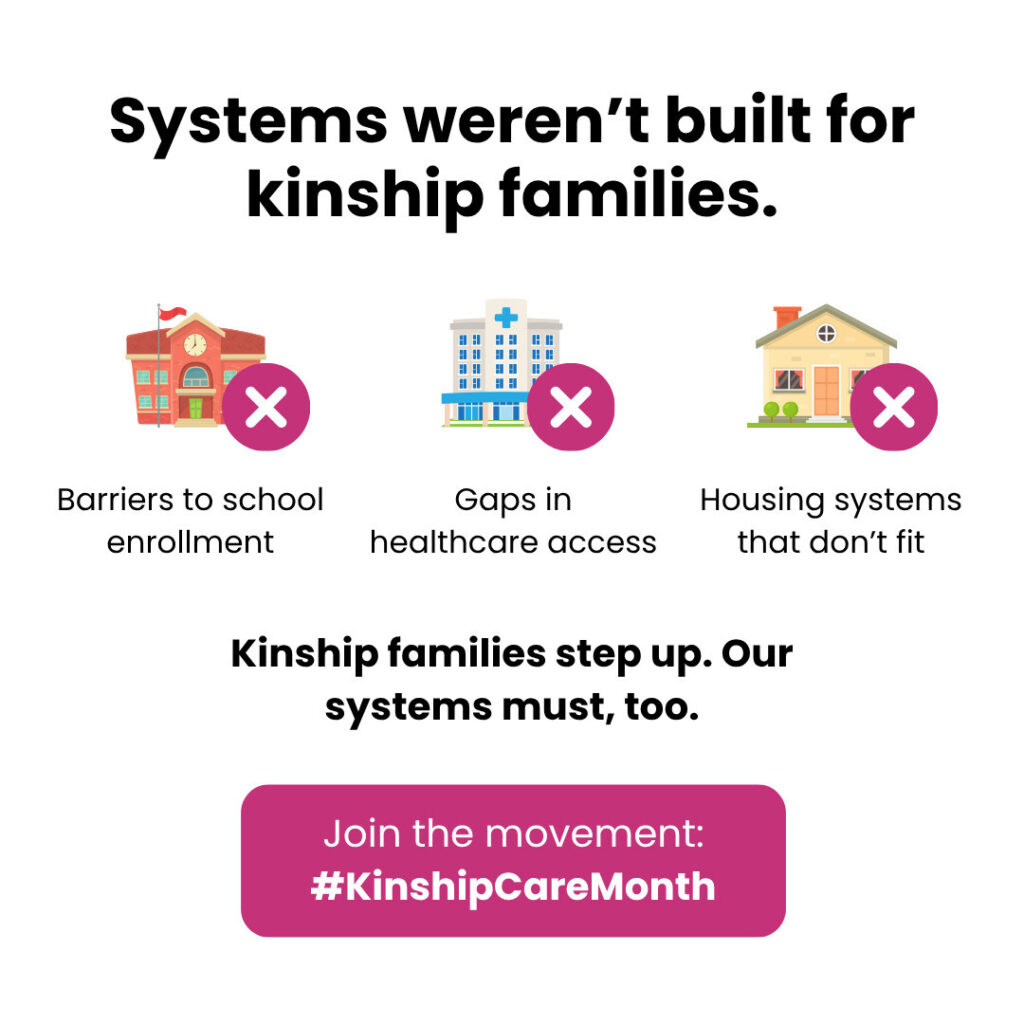
💜 Kinship families are strong—but the systems meant to support families weren’t built with them in mind. Too often, caregivers face barriers enrolling kids in school, accessing healthcare, or securing stable housing.
That’s not just inconvenient—it’s unjust. It’s time to connect systems to recognize, respect, and support grandfamilies.
#KinshipCareMonth
Caption for X:
Kinship families are strong—but systems weren’t built for them.
School enrollment, doctor visits, and housing support are often out of reach.
That’s not just hard—it’s unjust. It’s time for change. 💜
#KinshipCareMonth
Download and Post the Graphics:
Suggested Timing:
- Anytime
Newsletters
Do you have a newsletter being distributed before September 30? Share this!
About 2.5 million children in the U.S. are growing up in kinship families—being raised by grandparents, other relatives, or close family friends when their parents cannot care for them. These families provide stability, love, and cultural connection, but too often, they do so without the recognition or support they deserve.
This National Kinship Care Month, we’re raising awareness, listening to kin caregivers, and committing to work alongside them to build stronger systems of support—this month and beyond. Organizations across the country are, too.
📣 Join the movement. Use #KinshipCareMonth to help elevate the voices and experiences of kinship families.
Email Signature
This month, re-vamp your email signature, which will highlight our collective effort to raise awareness and support kinship families.
- Join (ORG NAME) and others nationwide to celebrate National Kinship Care Month. Use #KinshipCareMonth on social media to help elevate the voices and experiences of kinship families.
Videos for Building Awareness
The Grandfamilies & Kinship Support Network produced several videos that help build awareness of who kinship families are, including their strengths and needs. Three of the videos share real stories from actual kin caregivers. Find more videos on the Network’s YouTube channel.
We will be sharing these videos from our LinkedIn account this month. Look for them and re-share as you see fit, or you are welcome to share them on your own.
Fact Sheets, Data, and Research
- National Kinship Data
- Compiled by the Grandfamilies & Kinship Support Network
- GrandFacts
- Fact sheets for each state and several tribes and territories that provide kinship families with program information specific to where they live
- Summary of National Research
- Shows that children thrive in kinship families
- Strengths and Challenges of Kinship/Grandfamilies
- Fact sheet available online and for download
Infographics
Need a quick way to explain who grandfamilies are? Download infographics!
- How Children in Grandfamilies Thrive
- How Many Children Are Being Raised in Grandfamilies (another version)
Outreach Brochures
You can introduce kinship families to professionals in many of the systems and organizations that touch their lives – aging, child welfare, education, Family Resource Centers, nutrition/food programs, and TANF – by sharing these system-specific brochures.
- Kinship Matters to Aging
- Kinship Matters to Child Welfare
- Kinship Matters to Education
- Kinship Matters to Family Resource Centers
- Kinship Matters to Nutrition
- Kinship Matters to Temporary Assistance to Needy Families (TANF)
Zoom Backgrounds
Join us in celebrating National Kinship Care Month by using one of these Zoom backgrounds!
Thank you for celebrating!
The Grandfamilies & Kinship Support Network: A National Technical Assistance Center (Network) helps government agencies and nonprofits in states, tribes, and territories work across jurisdictional and systemic boundaries to improve supports and services for families in which grandparents, other relatives, or close family friends are raising children whose parents are unable to do so. For more information, please visit www.GKSNetwork.org.
The Network is supported by the Administration for Community Living (ACL), U.S. Department of Health and Human Services (HHS) as part of a financial assistance award totaling $9,950,000 with 95 percentage funded by ACL/HHS and $523,684 and 5 percentage funded by non-government sources. The contents are those of the authors and do not necessarily represent the official views of, nor an endorsement, by ACL/HHS, or the U.S. Government.