Guide/Report
Strengthening Kinship Support by Title VI Native American Aging Programs
Download This Resource

Introduction
Grandparents and other relatives play a vital role in Native American communities, raising roughly 200,000 Native American children whose parents are unable to care for them.
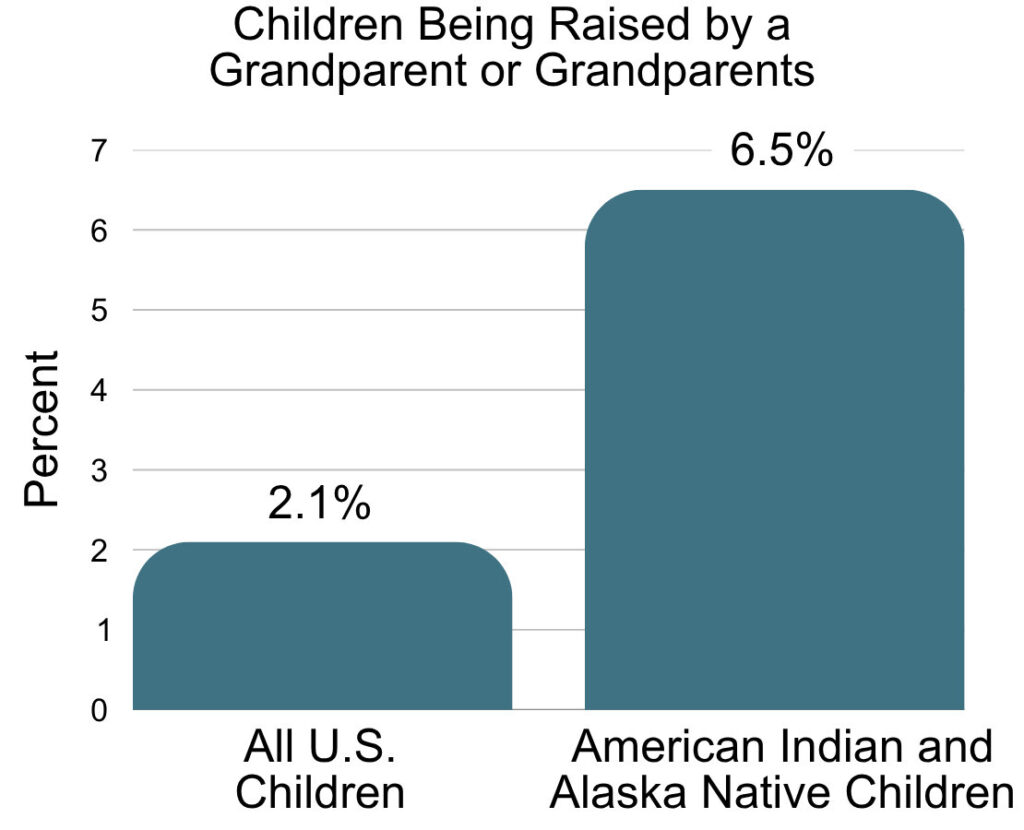
Child Trends found that American Indian and Alaska Native children are being raised by a grandparent or grandparents at a rate (6.5%) that is more than three times that of all U.S. children (2.1%).
The reason for this difference is complex, including both historical U.S. policy decisions and the “long-standing [Native American] traditions of caring for extended family.”
Research shows that both children and their relative caregivers—often called “kin caregivers”—benefit from the cultural and familial connections of kinship/grandfamilies. Studies also indicate that kinship/grandfamilies are disproportionally impacted by financial instability, disability, and trauma, yet their well-being improves when they have access to appropriate services.
Title VI Native American Aging Programs (Title VI programs) provide a range of supportive services, including nutrition programs, social and cultural activities, and transportation, for American Indian, Alaska Native, and Native Hawaiian elders across the United States. Most Title VI programs also support older relative caregivers and the children they raise.
Using data collected from USAging’s 2023 nationally representative survey of Title VI programs and 2026 interviews with select Title VI programs, this report summarizes the types of services Title VI programs offer to relative caregivers and their families, with whom they partner, and their top challenges in supporting these families.
It also highlights how the federally funded Grandfamilies & Kinship Support Network: A National Technical Assistance Center (Network)—of which USAging is a proud managing partner—can help Title VI programs and other organizations tackle these challenges, create new services for kin caregivers, expand and enhance existing services, and expand cross-system collaboration to reduce silos in care.
This report uses data collected from USAging’s 2024 Chartbook, Supporting Native Elders in Their Communities: Title VI Native American Aging Programs and Services. The web-based survey, funded by a cooperative agreement with the U.S. Administration for Community Living (ACL), was launched in August 2023 and disseminated to all 290 Title VI programs. Data collection concluded in November 2023, with 80% (n=233) of Title VI programs responding.
Most Title VI Programs Support Older Kin Caregivers
16% of Title VI programs do not offer services to older kin caregivers
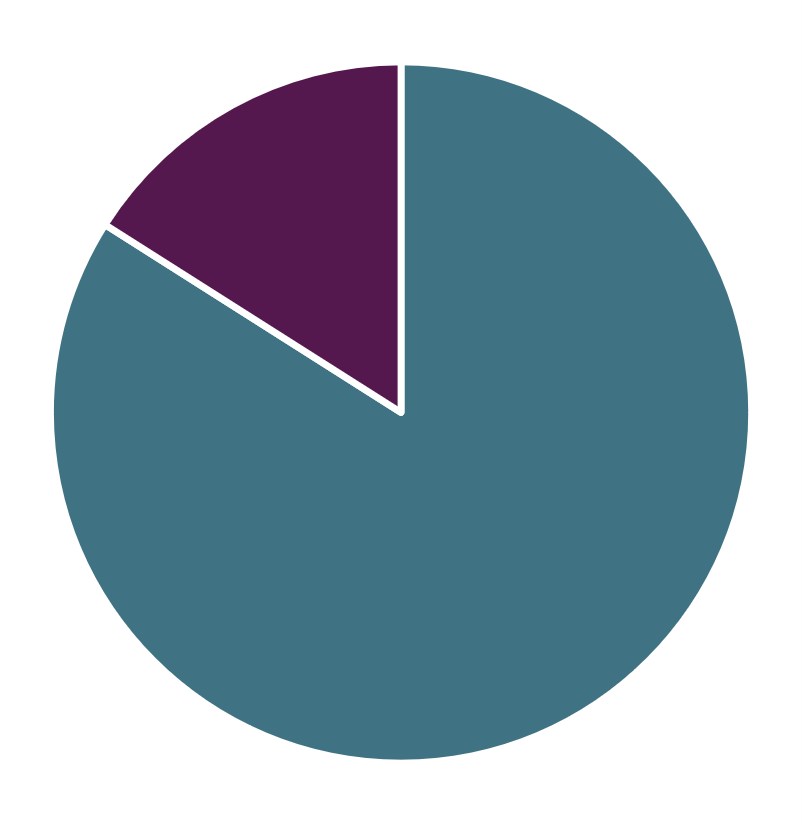
84% of Title VI programs offer services to older kin caregivers
According to the survey, 84% of Title VI programs offer at least one tailored service to older kin/relative caregivers.
Title VI Programs Provide Services Needed by Kin Caregivers
In its 2021 State of Grandfamilies report, Generations United identified 11 “key services and supports” needed by kinship families. These include information and assistance in navigating and accessing available services, caregiver training or education, respite, financial assistance, and support groups. When asked about the services they provide to older kin/relative caregivers, Title VI programs report offering many of these key services.
Percentage of Title VI Programs Providing Key Services for Kin Caregivers
| Key Services Provided | Percent of Title VI Programs |
| Information & Referral | 61% |
| Assistance Accessing Services | 55% |
| Training/Education | 46% |
| Respite | 44% |
| Caregiver Counseling | 37% |
| Support Groups | 34% |
Another 45% of Title VI programs offer supplemental services for kinship/grandfamilies, including in-kind support, income assistance, cultural activities, and legal services.
In the territory of the United Keetoowah Band of Cherokee Indians in Oklahoma (United Keetoowah), distances between Tribal services and relative caregivers can be up to 150 miles. To meet this challenge, the United Keetoowah’s Title VI program provides transportation assistance. They also offer relative caregivers a support group and respite. Read about another Title VI program’s innovative transportation solution to overcome distance obstacles.
The Grandfamilies & Kinship Support Network offers many no-cost resources for Title VI programs and other organizations wishing to start new kin caregiver services, including the Starting a Kin Caregiver Support Service: Learning Community Insights Toolkit, Toolkit for Starting a Kin Caregiver Respite Program, Grandfamily Support Groups: Seven Tips for Getting Started and its accompanying recorded webinar, and the recorded webinar Supporting America’s Children and Families Act: Opportunities for Tribes Delivering Kinship Services.
Title VI Programs Support Children from Kinship Families
In addition to supporting relative caregivers, many Title VI programs administer services for children in kinship/ grandfamilies. These include child care, mental health services, and case management.
The Title VI programs at Redding Rancheria in California and the Choctaw Nation of Oklahoma provide no-cost school supplies and clothing for children from kinship/grandfamilies. The Choctaw Nation of Oklahoma also helps with the costs of summer camp and extracurricular activities, like karate or dance classes, for children living with grandparents or other relatives.
Title VI Programs Have an Array of Partners
Whether to increase their own capacity or extend their reach, Title VI programs partner with a wide range of government agencies and community-based organizations.
Percentage of Title VI Programs that Partner with Key Organizations
| Partners With: | Percent of Title VI Programs |
| Health Departments or Clinics | 46% |
| Social Services or Benefits Programs (e.g., Supplemental Nutritional Assistance Program, Temporary Assistance for Needy Families) | 42% |
| Housing Departments | 35% |
| Area Agencies on Aging | 31% |
| Mental Health Providers | 28% |
| Nutrition Providers | 28% |
| Child Welfare Agencies | 25% |
| Schools/Preschools | 25% |
| Before-School/After-School/Camp Programs | 21% |
| Legal Aid Providers | 16% |
| Youth Organizations (e.g., Scouts, 4H, etc.) | 12% |
| Kinship Navigators | 7% |
| Service Clubs (e.g., Rotary) | 3% |
Title VI programs also partner with one another to support relative caregivers. For example, in Oregon, all nine Title VI programs gather each year to host a “Native Caregiver Conference,” where Native caregivers, including relative caregivers raising children, can learn about resources and caregiving skills.
Top Challenges Facing Title VI Programs in Supporting Kin/Relative Caregivers…
Title VI programs report that their top challenges in supporting kin/relative caregivers and their families are:
- Limited funding
- Not enough staff to support elders caring for children
- Providing respite services (e.g., child care for children when offering supports/services to the elder caregivers)
- Caregiver distrust or fear of the system
- Finding families/outreach
Other challenges reported by Title VI program directors include lack of transportation to services and navigating providers outside of the Aging Network (e.g., schools).
…and Resources Available at No Cost That Can Help Address These Challenges
- Funding Kinship Services: A Primer on Federal Funding Sources
- Funding Kinship Programs and Services: Tips & Resources (recorded webinar)
- Lessons from the Field: Leveraging Partnerships to Address Staff and Infrastructure Needs and Extend Reach
- Toolkit for Starting a Kin Caregiver Respite Program
- Tribal Best Practices for Family Engagement
- Outreach Learning Community Toolkit, which includes tip sheets on Overcoming Barriers to Connecting with Kinship Families and on Building Trust with kin caregivers
- We Know Grandfamilies Are Out There. How Do We Find Them?
- Supporting Educational Access for Kinship/Grandfamilies Tip Sheet
- How Relative/Kin Caregivers Can Access Services and Advocate for Native Children in Their Care
- State- and Tribe-specific GrandFacts fact sheets, which provide contact information for local service providers as well as general data
Conclusion
Title VI programs work hard to support kin/relative caregivers and the children they raise. But many face challenges in doing so. Technical assistance by the Network has helped numerous Title VI programs, Area Agencies on Aging, and other nonprofit organizations and government agencies overcome challenges and improve support for kinship/ grandfamilies.