
Lutheran Social Services of the Southwest (LSS-SW) operates three Family Resource Centers (Phoenix North, East Mesa, West Mesa) across Maricopa County. As school- and community-based hubs, these FRCs strengthen families through prevention, education, and concrete support. While faith-based, all services are open to families regardless of religious affiliation.
In 2023, LSS-SW reorganized its Children and Families Division, intentionally merging foster care and FRC programming. This integrated model ensures that kin caregivers and grandfamilies receive seamless support alongside foster families, reducing duplication and expanding access.
Organization Profile
LSS-SW is a long-standing provider of social services in Arizona, with deep roots in Maricopa County. The Family Resource Centers build family strengths through classes, coaching, and community connection, while also supporting traditional foster and kinship families with concrete resources and advocacy.
Quick Facts
Founded
1970
Location
Urban/Metro Phoenix, Maricopa County, Arizona
Number of Kinship/ Grandfamilies Served Annually
318 kin caregivers, including 63 grandfamilies who participated in Grand Connections classes
Race/Ethnicity of Overall Population Served Annually: Families Across Maricopa County
- 14.6% Asian
- 26.4% Black
- 1.8% Hawaiian/Native American
- 24% Hispanic/Latino
- 23% White
- 10.2% Other
Collaborating for Impact
- Lutheran Services in America (LSA) Results Network – LSS-SW participates in a national learning network focused on reducing the disproportionate number of Black and Brown children in the child welfare system. This collaboration uses a two-pronged approach: (1) delivering prevention programs through the Family Resource Centers that are grounded in the Strengthening Families Protective Factors Framework, and (2) supporting kinship families in addressing unmet needs and breaking cycles of trauma and poverty.
- Arizona Department of Child Services – LSS-SW holds contracts that support co-located Family Resource Centers and foster/kinship programs, enabling coordinated support for caregivers navigating complex systems.
- Community Foundations – LSS-SW secures targeted grants that fund kinship-specific programming and emergency support for caregiving families.
- Child-Serving Organizations – LSS-SW collaborates with local partners to deliver comprehensive early childhood supports, including Raising A Reader literacy programming and Ages & Stages Questionnaires® (ASQ®) developmental screenings for children under age six. Staff work directly with kin caregivers—especially those caring for children placed from out of state who are ineligible for Arizona-specific benefits—to help them apply for Supplemental Nutrition Assistance Program (SNAP) benefits and enroll in AHCCCS (Arizona’s Medicaid system) to offset food and healthcare costs. These efforts ensure equitable access to essential supports despite interstate placement challenges.
Program Innovation & Results
Kinship/Grandfamily Services
- Family Coaching Program – Monthly home visits for three to six months; goal setting with the Colorado Family Support Assessment; links to SNAP, AHCCCS, parenting classes, and literacy programs
- Kinship Cafés – Monthly peer support sessions modeled on the Be Strong Parent Café framework
- Dinner with the Director – Monthly small-group dinners with five kinship families designed as informal listening sessions and peer connection spaces. These sessions surface emerging needs and inform program changes. For example, families caring for children placed from out of state voiced barriers in accessing benefits. As a result, the team partnered with the state child welfare agency to establish a fast-track application pathway for SNAP and AHCCCS, including a dedicated contact line for kinship foster case managers. Additionally, the team redesigned its holiday gift distribution process—shifting from pre-packed deliveries to a family-centered “gift shopping” experience based on caregiver feedback.
- Virtual Kinship Closet – Small, flexible funds ($200–$400) to meet urgent needs like school supplies, baby gear, or sports registration
- Grand Connections Program – Uses a curriculum from ZERO TO THREE, plus modules on Strengthening Families Protective Factors
- Caregiving Classes – Eight-week training for foster parents and kin/grandfamily caregivers
At a Glance
- Annual Program Cost: Contract-based (Department of Child Safety + foundation funding; breakout not available)
- Full-Time Equivalent (FTE) Staff: 21 FTE – 3 family coaches and 1 supervisor + 18 foster care specialists
- Duration/Dosage: 3–6 month Family Coaching, monthly Cafés/Dinners, ongoing family cohorts
- Evidence-Based / Research-Based: ZERO TO THREE curriculum, Be Strong Parent Cafés, Strengthening Families framework
- Formal Curriculum: ZERO TO THREE, Be Strong Parent Cafés
- Staff Training Required: case management, Colorado Family Support Assessment, Family Development Credential, Protective Factors Standards of Quality
Program in Action: Listening Over Dinner
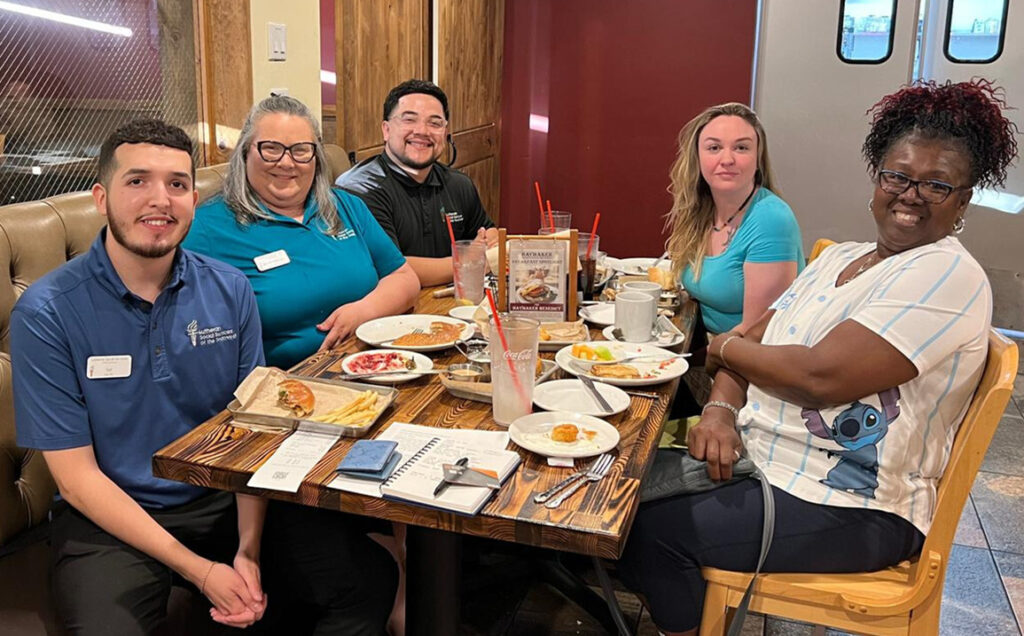
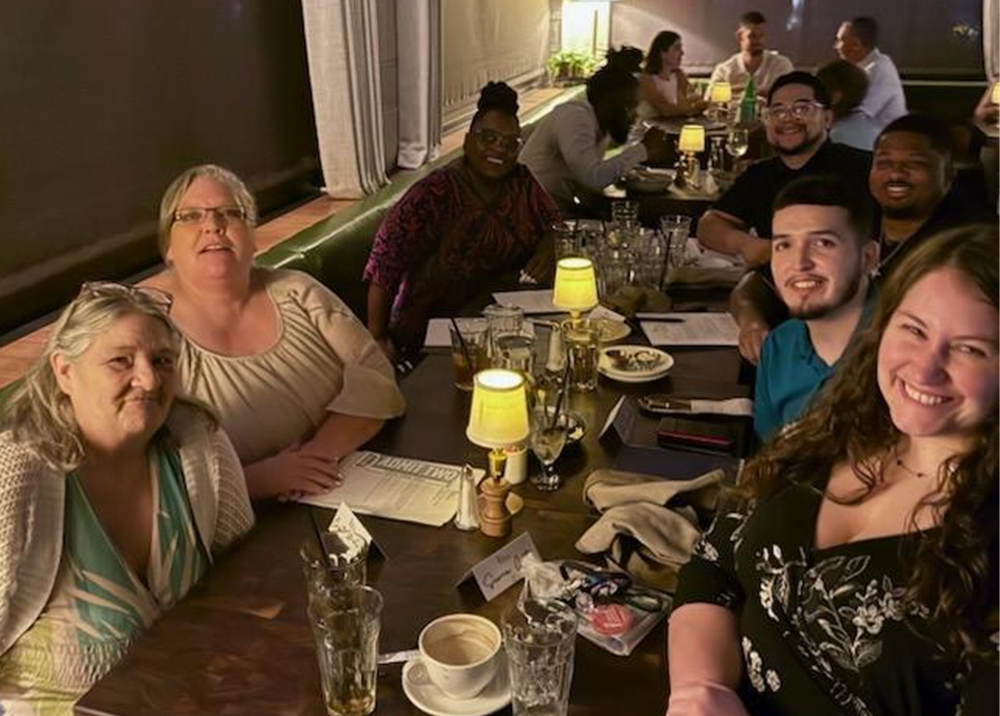
Each month, LSS‑SW hosts a Dinner with the Director, inviting five kinship families to share a meal with leadership and staff. With no formal agenda, these gatherings are intentionally designed as informal listening spaces where families can share their lived experiences, challenges, and ideas while building peer connections in a welcoming environment.
At only $200 per dinner, the program is a low‑cost, high‑impact strategy that builds trust between caregivers and staff, strengthens collaboration with lived experience (LEX) leaders, and creates opportunities to develop family leaders who walk alongside staff in shaping services. These dinners deepen both family and organizational connections and directly inform program improvements, ultimately supporting stronger and more responsive outcomes for kinship families.
One caregiver reflected:
It’s very encouraging to hear others’ stories in relation to kinship care. Being able to meet the staff that run this wonderful organization is very insightful as well.
What They’ve Learned
- Active listening—through dinners and Cafés—builds more trust than surveys.
- Grand Connections reduces social isolation for older caregivers; families continue gathering even after classes end.
- Family Coaching emphasizes following family strengths and goals, not imposing solutions.
- Diverse staffing, including bilingual, Spanish-speaking staff, is essential for access and trust.
Results & Replication
Evaluation
Results are still emerging due to the 2023 integration of LSS-SW’s FRC and foster care divisions. Participation in LSA’s Results Network is shaping evaluation of protective factors and disproportionality reduction.
Replication Potential
- Grand Connections, with the added Strengthening Families Protective Factors module, and Dinner with the Director are replicable, low-cost, high-impact models.
- The Virtual Kinship Closet can be adapted with modest flexible funding.
- Caregiving Classes can serve foster families and kinship families alike.
- Integration of foster care and FRC services is a promising statewide and national model.
This spotlight is part of a national series celebrating innovation in Family Resource Centers serving kinship/grandfamilies. To learn more about how Family Resource Centers support kinship/grandfamilies, see Family Resource Center Services and Supports for Kinship/ Grandfamilies, a resource created by the National Family Support Network and the Grandfamilies & Kinship Support Network.