Project Healthy Grandparents (PHG) is among the oldest continuously operating programs for grandparents raising grandchildren in the United States. Since 1995, this research-based community program at Georgia State University (GSU) has provided in-home nursing and social work services to grandparents and the grandchildren they raise. Throughout the 12-month intensive intervention, PHG places an emphasis on building upon each grandparent’s strengths to educate and empower them, so they have the tools to continue their caregiving journey. The Grandfamilies & Kinship Support Network is pleased to designate Project Healthy Grandparents as exemplary.
The core components of Project Healthy Grandparents include:
- Monthly home visits with registered nurses.
- Case management and monthly home visits with social workers.
- Developmental screenings for the grandchildren.
- Monthly caregiver support groups.
- Additional supports as identified by grandparents.
When I started this, I couldn’t see the forest because of the trees, but now I’m beginning to see, I can see the forest, I can see now where my grandchild can grow and develop and be well-served. I know where to go. I know how to talk to those teachers. I know how to talk to whomever, the doctors and nurses, whomever for my grandchild’s sake and I know how to take care of myself because my nurses have taught me what I need to do.
PHG staff member quoting grandparent caregiver clients
Eligibility for Services and Intakes
PHG is a 12-month intensive program that is open to grandparents who are the primary caregivers of their grandchildren and are raising them in households that do not include the children’s parents. The families must live within a 20-mile radius of the Georgia State University campus in downtown Atlanta. There are no age requirements or income limits for the grandparents, but the grandchildren must be age 16 or under. Because it is a research-based program, each grandparent may participate only once in the program. Grandparents who have completed the 12-month program are eligible to stay connected by participating in support groups. Enrollment into the program occurs on a rolling basis throughout the year.
Service Population
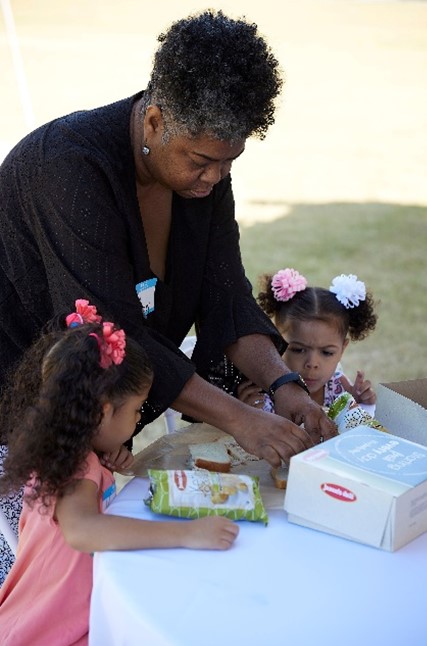
As of May 2026, the program has served more than 3,900 grandparents and grandchildren. About 98 percent of their clients are African American women between the ages of 37 and 84, with an average age of 56, raising an average of 2.4 grandchildren.
Although PHG has no income restrictions, 98 percent of the families they serve are living in poverty. Additionally, most of the grandparents PHG serves have underlying health conditions – 25 percent have diabetes, 50 percent have hypertension, and 60 percent meet the Centers for Disease Control and Prevention criteria for obesity. Furthermore, most of the grandparents do not have health insurance, because they do not qualify for private employer-based insurance, are too young for Medicare, or earn too much for Medicaid. The grandchildren typically qualify for Medicaid and PHG helps the families obtain that coverage.
Services
Monthly Home Visits with Registered Nurses
Monthly home visits begin with a registered nurse talking with the grandparent about the health histories of the grandparent and the grandchildren. The nurse takes the grandparent’s blood pressure, weight, cholesterol, and glucose levels to establish a baseline, in addition to reviewing all the medications the grandparent takes. If the grandparent is taking multiple medicines for the same condition, it is often because they lack a health care home. The nurse will help the caregiver to understand what each medicine is for, when to take it, and which medicine is duplicative and unnecessary.
To empower the grandparents to monitor their own health, the nurses provide each family with a scale to check body weight, a blood pressure machine, a glucometer for assessing blood glucose levels, and even exercise equipment. The nurse also connects the grandparent to a primary care provider when needed and helps grandparents establish a medical home, so they no longer rely on urgent care centers or emergency rooms. For the many grandparents who are uninsured, PHG staff provide a connection to one of several Atlanta clinics that serve uninsured and underinsured patients. That clinic then becomes their medical home, delivering primary care.
The ‘Healthy’ [in the name Project Healthy Grandparents] is that we all know that we have to maintain our health because we got little people depending on us, needing us… I got to maintain…[myself] to be able to help them.
Grandparent caregiver client
Monthly Home Visits and Case Management with Social Workers
Through monthly home visits, PHG’s social workers work with the grandparent to develop and implement individualized case management services. Together, they assess individual, family, and community strengths, and identify and prioritize family challenges. The social workers make service referrals to community providers for housing, childcare, clothing, public benefits, and legal assistance.
Grandparents “come to this situation with a lot of strengths, as you can imagine, and what our expert social work team does [is] they work with these grandparents on identifying their strengths that they came to the situation with, that they already have, and help them build upon those strengths and realize that yes, with just a little bit of support, they can do this.
PHG staff member
As families stabilize over the course of the one-year intervention, social workers transition to serving as “coaches” for grandparents to help them identify and tap into their personal strengths to address family needs. For example, social workers will accompany the grandparents to appointments and teach and empower the grandparents to take the lead in sharing their concerns and needs.
The social workers and nurses work collaboratively. They have regular case meetings and communicate in between those meetings as well. For example, if a nurse discovers an issue when she is visiting, she lets the social worker know so that they both can monitor it.
PHG provides ongoing support to grandparents who have completed the one-year intervention through short-term case management services and referrals to community resources to address urgent needs.
Developmental Screenings for the Grandchildren
In addition to its services for grandparents, the PHG program has an early intervention component for the grandchildren. PHG social workers conduct individual developmental screenings on all babies, toddlers, and children whose grandparents are part of the program and who are no more than five years old. When results indicate possible developmental delays, PHG refers the child for a comprehensive evaluation at the Neurodevelopmental Clinic at Emory University School of Medicine. Based on recommendations received from and interventions prescribed by the Clinic, PHG’s social workers help grandparents identify and access services to address their grandchildren’s developmental needs.
For grandchildren ages 6 to 16 who appear to have developmental, behavioral, or academic challenges, PHG’s social workers facilitate comprehensive assessments and services.
PHG social workers also provide intensive support by helping the grandparents advocate for their grandchildren. They often accompany them to appointments, including medical visits, early intervention appointments, and Individual Education Plan (IEP) meetings at schools.
Caregiver Support Groups
PHG has monthly in-person support groups for grandparents who are currently participating in the program and those who have completed the one-year program. These groups provide a way for all grandparents to support one another and for those who have completed the program to stay connected. Support groups often feature guest speakers on topics of interest to the grandparents, and PHG provides transportation to participants through a van that PHG owns.
Based on study findings discussed below, PHG is pivoting to provide additional support groups at varying times of the day and different days of the week. In addition, PHG will be piloting a health and wellness support group for grandparents in summer 2026.
Knowing that there were other people, women like me trying to raise these grandbabies and don’t know what in the world the new math is and the old math, whatever. And they were going through the same thing I was, and it was such a relief to know I wasn’t alone. And the [PHG staff members] were so helpful. I told them, I don’t care if I cannot be in the program longer; you have me for life and I’m never leaving.
Grandparent caregiver client
Youth Services
PHG offers Youth Services programming to support youth through enrichment, cultural and educational exposure, and meaningful social connection, equipping young people with the skills, confidence, and experiences needed to thrive academically and personally. A key component of the program is academic support through tutoring provided by Master’s-level students from GSU, offering high-quality, individualized guidance that strengthens academic achievement and builds positive mentoring relationships. Youth are also connected to additional mentorship opportunities through referrals to trusted community-based programs, ensuring sustained support beyond program participation.
To enhance cultural and educational exposure, PHG offers a range of enrichment activities, including visits to the High Museum of Art and hands-on art workshops. Additionally, the program hosts an annual College Day at Georgia State University. This immersive experience includes youth workshops, vocational exploration sessions, and a comprehensive campus tour, all designed to increase college awareness, inspire future aspirations, and prepare participants for postsecondary success. Through this holistic approach, PHG empowers youth to connect, grow, and envision a broader range of possibilities for their futures.
Additional Supports
Grandparents who are raising their grandchildren often have mental health challenges, particularly depression, post-traumatic stress disorder, and anxiety-related disorders. PHG found that grandparents were not accessing mental health services, despite the social workers’ referrals to providers. In response, PHG contracted with a private counseling practice to start providing services as part of the program’s offerings and secured funding to pay for this essential care for those who are uninsured. With trusted PHG social workers introducing the grandparents to counselors who are part of a small practice that does not feel institutional, the transition to mental health services has been much less frightening. Grandparents are now going, valuing the support, and routinely referring to the counselors as “my therapist.”
As PHG identifies additional needs, they attempt to obtain the funding to respond. For example, one grandmother could not afford to get her granddaughter’s braces removed. The braces, which had been unattended for several years, were creating oral pain for the granddaughter. The nursing services coordinator noticed that this was part of a larger pattern in which grandparents were not getting dental, vision, and hearing services for themselves and in which grandchildren occasionally needed services that Medicaid did not support. So, they sought and obtained private funding to pilot a dental, vision, and hearing program. Through this program, the grandmother was able to pay to have her granddaughter’s braces removed, relieving the child’s pain.
Staff
A director and an assistant director lead the program. Frontline staff include a youth services and outreach coordinator, a nursing services coordinator who works with several nurses who are graduate research assistants at Georgia State University, three social workers, and a short-term case manager. Several PHG staff members were raised by their grandparents, and that personal connection to the families is key to building trust with the grandparents.
I was raised by my grandmother and the kind of services that Project Healthy Grandparents offers families, I really wish that was there for my grandmother…If she had a case manager or someone that could kind of guide her, I think it would’ve been easier for her and it would’ve been a lot better for us as well.
PHG social worker
Key Partners
Nine of the project’s key partners are:
- Atlanta Legal Aid Society, Inc. – provides free legal assistance to eligible grandparents and presents on legal issues during support groups meetings.
- Center for Leadership in Disability – collaborates with PHG to provide programming, support, and referrals for grandparents and grandchildren with disabilities.
- Coxe Curry Associates –Atlanta-based consulting firm that helps PHG, and other nonprofits, with fundraising.
- Emory University and the Emory Neurodevelopmental Exposure Clinic – accept referrals for comprehensive early intervention assessments and services.
- Grady Health System – includes health care clinics that offer a medical home for PHG’s uninsured grandparent clients.
- Kinship Navigator Program at Georgia Division of Family & Children Services (DFCS) – helps caregivers obtain public benefits, including Temporary Assistance for Needy Families, Medicaid, and SNAP (Supplemental Nutrition Assistance Program).
- Project GRANDD –accepts referrals to work with kin caregivers who are not eligible for PHG services (like aunts and siblings) and grandparent caregivers who have completed the project and still need further support.
- Sessley Counseling Services – contracts with PHG to provide individual mental health counseling to grandparents raising grandchildren and allows for fast-tracked referrals through PHG.
- Youth Spark – provides trauma-informed, wraparound services for youth impacted by abuse, exploitation, and trafficking, including counseling, case management, and legal advocacy.
Project Healthy Grandparents really provides…an incredible amount of support. I’ve been very impressed with the quality of the social workers, their dedication, [and] the care and support of the children…We feel so much more comfortable when the child comes in from Healthy Grandparents…because they’re going to be able to get much more of what they need.
PHG health care partner
Caregiver Engagement
PHG routinely engages its grandparent caregivers to inform its service offerings. A grandparent caregiver and an adult raised by a grandparent serve on PHG’s 15-member Community Advisory Board. During their monthly home visits, nurses and social workers ask the grandparents for feedback on PHG-provided services. The nursing services coordinator also conducts phone surveys to assess active families’ satisfaction with all direct service staff. Surveys distributed at each support group meeting invite attendees to share topics of interest for future discussions.
PHG asks grandparents to rate their overall satisfaction with the program when they graduate from the one-year intervention. Response options range from extremely unsatisfied to extremely satisfied. The results show that 100 percent of grandparents are satisfied or extremely satisfied, with 60 percent reporting that they are extremely satisfied and 40 percent saying that they are satisfied.
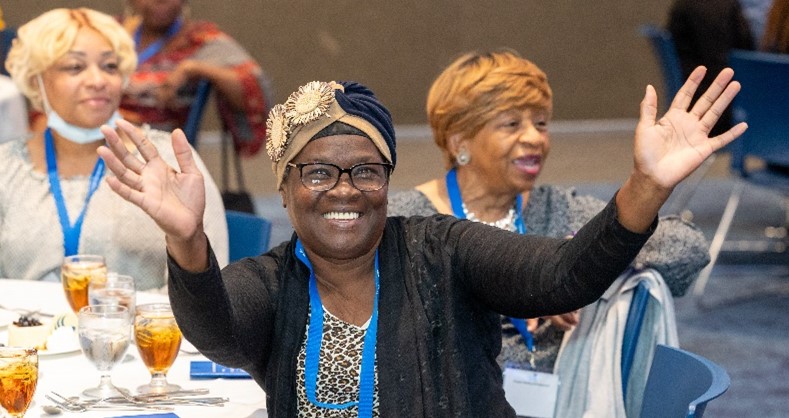
PHG staff report that the grandparents want to give back, and they have started discussions with several grandparents about creating a formal group of “Grandparent Ambassadors.”
Outreach to Families
Most grandparents who enroll in PHG learn about it through word-of-mouth from other grandparents. The program also receives referrals from partners including Atlanta Legal Aid, Inc., teachers/schools, hospitals, clinics, and pediatricians. PHG staff members attend health fairs and do presentations around the community. For example, PHG gets and fulfills many requests to go into the schools and talk about their services. Media stories have also helped attract new grandparent clients.
Funding and Sustainability
Historically, GSU has been a huge financial supporter of Project Healthy Grandparents. GSU also provides in-kind support, including office space, and a portion of the director’s salary. About 25 to 30 percent of the program’s funding is provided by the Georgia Department of Health and Human Services through federal Community-Based Child Abuse Prevention and Promoting Safe and Stable Families funding.
In 2023, the Project received a $700,000 congressional award sponsored by U.S. Representative Nikema Williams (from Georgia’s 5th District). This support helped PHG accomplish several wish-list objectives, including hiring a short-term case manager to continue to work with the families after the 12-month intervention and developing a statewide training for child welfare and aging professionals around the state. The training is part of a larger initiative through the GSU School of Social Work’s “Professional Excellence” Program. The in-person and online training will share insights about the unique needs of grandparents raising grandchildren and how to capitalize on their strengths.
In response to university and state budget cuts, PHG has intentionally diversified its funding portfolio by expanding partnerships and securing additional support from county sources, private foundations, and individual donors. In August 2025, Project Healthy Grandparents took an important step toward long-term stability and future growth by moving to a new home within GSU. With support from their Executive Team and Advisory Council, PHG relocated from the School of Nursing to the School of Public Health’s Center for Leadership in Disability, located within the Mark Chaffin Centers for Healthy Development.
Demonstrating Success and Continuing Quality Improvement
As a university-based project with an almost 30-year history, there is a plethora of evaluations, studies, and research articles demonstrating the program’s success.
PHG researchers conducted a qualitative study examining the long-term effects of having participated in the PHG one-year intervention. Findings from this study, which will be submitted for publication in 2026, show that five to ten years after exiting the program, grandparents still felt the benefit of having participated in PHG. In fact, most grandparents stated that PHG grandparent support groups and the developmental screening and support their grandchildren received were critical to their grandchildren’s long-term academic success. Importantly, 100 percent of the grandchildren raised by the grandparents who were included in this study continue to do well, both academically and socially, five to ten years after program participation.
In terms of continuing quality improvement, grandparent client feedback is at the core of data collection and analysis. Program outcomes are reviewed and used in conjunction with qualitative research findings to improve the overall quality, effectiveness, and responsiveness of PHG services. Additionally, PHG routinely checks in with program stakeholders, including DFCS and community-based medical facilities, to update them on program changes and ask about their satisfaction with PHG services. Staff members also participate in several community coalitions, which allows the program to obtain feedback from colleagues regarding the quality and effectiveness of PHG’s services.
I think this program in particular is authentic about its feedback loop changing what needs to be changed to meet the needs.
PHG partner
Challenges and Areas for Program Improvement and Growth
The frontline social workers generally have a manageable caseload of approximately 15 to 16 families, but providing a listening ear and helping the families exit the program can be challenging and time-consuming. Using federal funding received in 2023, PHG piloted a short-term case management program for grandparents who have graduated from the program and still need some assistance; this program is also supports the social workers, who previously spent time responding to former clients needing support. Compassion fatigue can inevitably result when a program’s staff is caring and committed, and PHG’s contract with a counselor also alleviated some of the burden on its social workers.
Stakeholders universally praised the program and would like to see the program grow, serve more grandparents, and offer more respite care to the grandparents.
Lessons Learned
Project staff members encourage programs that are part of a university, a large nonprofit organization, or a government agency to engage other departments in the work. Invite those departments to events and make sure they understand the work. This outreach will eventually result in leveraged resources and more buy-in for your program’s sustainability.
Staff identified that a key to their success is their ability to respond to client needs, stay flexible, remain informed about programming trends and technology, and pivot as needed.
Additional Program Resources
Learn More about the Network’s Exemplary Designation
Network staff, along with two staff of a partner organization, participated in a site visit to this program and are available to answer questions based on this summary. Please complete this short form and we will get back to you.
For information about the steps and criteria of the exemplary designation process, please click here.