Fact Sheet
Gallatin County Family Resource Center – GrandLOVE Program
Download This Resource

The Gallatin County Family Resource Center (FRC) is a school-based hub that strengthens families and builds community connections for kin caregivers. By embedding supports directly within the school, the FRC reduces barriers for families and ensures students are surrounded by circles of support. Its signature kinship program, GrandLOVE, adds an innovative layer of peer support, family bonding activities, and emergency assistance — proving that with minimal resources and strong community partnerships, rural FRCs can deliver a whole-family approach to serving kin caregivers.
Organization Profile
The Gallatin County FRC, based in Warsaw, Kentucky, serves over 750 children in grades Pre-K through 5 and their families.
The FRC helps families overcome barriers to education, serving as a bridge between school and home, and linking families with external supports. Its signature kinship program, GrandLOVE, provides a support group for grandparents, other relatives, close family friends, and foster parents who are raising children whose parents cannot.
Quick Facts
Founded
The Gallatin County FRC was founded in 1990, and GrandLOVE began operating around 2018
Location
Gallatin County, Kentucky (rural)
Number of Kinship/Grandfamilies Served Annually
46 grandfamilies and 2 foster families
Race/Ethnicity of Overall Population Served Annually
- 1% Black
- 12% Hispanic/Latino
- 83% White
- 5% Other
Survey results reveal both the scale of kin caregiving in Gallatin County schools and the complex reasons children enter these families. From 55 total responses to the Annual Needs Assessment Surveys (2024/25), 11 identified as kinship/grandfamilies. The reported reasons for caregiving were addiction (6), incarceration (2), neglect (2), and death (1). A staff survey identified 25.8% of students as being raised by kin.
Precise figures are unknown due to stigma and underreporting. As one staff member noted, “Many of our families feel great remorse and worry about perception of others because they are raising their relatives’ children — or someone else’s children. And 55 responses is just a small fraction of our families.”
Collaborating for Impact
The FRC partners closely with teachers, office staff, and child services, ensuring that kin caregivers are connected with the GrandLOVE support group and needed resources quickly when identified. Key partners include the University of Kentucky Extension Office (which provides a curriculum for family nights), local churches, and other local helping agencies.
Program Innovation & Results
GrandLOVE Kinship & Grandfamily Program
- Peer Connection – Monthly meetings during the school day for caregivers only, offering connection, crafts, and peer support
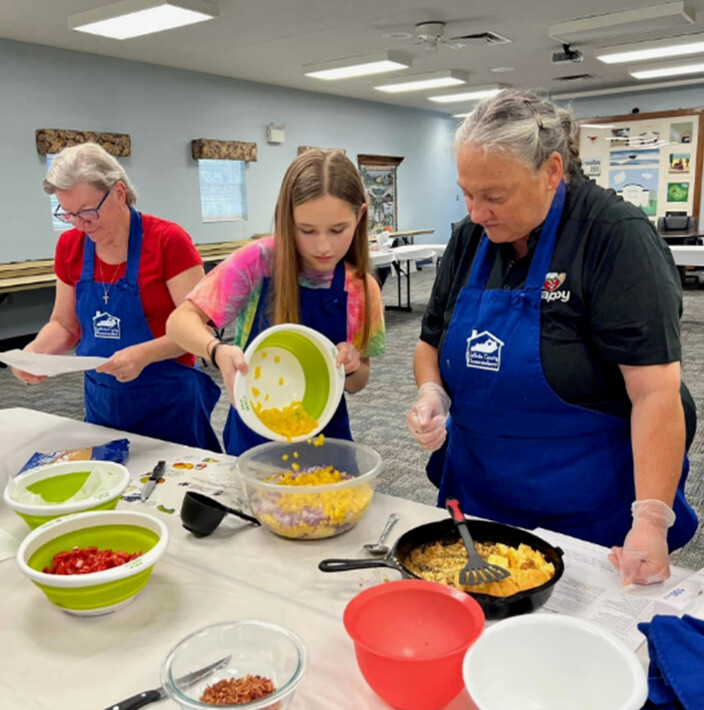
- Family Strengthening – Family nights using the University of Kentucky’s Plan, Eat, Move curriculum, where families cook, eat, and learn together
- Mindfulness & Self-Care – University of Kentucky Extension Services Crafting Calm program, with mindfulness and stress-reduction activities
- Community Experiences – Annual summer outing, such as a ballpark trip, for kinship families
- Concrete Supports – Coordinated housing, food, furniture, utility, and rental assistance through community partners
At a Glance
- Annual Program Cost: ≈$1,000
- Full-Time Equivalent (FTE) Staff: 0.05 (approximately 50 hours annually dedicated)
- Duration/Dosage: 2 hours monthly x 10 months + 1 annual evening (4 hours) + prep time
- Evidence-Based / Research-Based: Plan, Eat, Move curriculum; Crafting Calm mindfulness resources
- Formal Curriculum: Extension Service programs
- Staff Training Required: Statewide Division of Family Resource and Youth Services Centers trainings, Grandparents as Parents Conference Extension Office trainings
Program in Action: Finding Home Again
When one GrandLOVE grandmother realized her partner was unsafe for her grandchildren, she made the difficult decision to leave her home to protect them. With no immediate housing options, she and the children spent nights in their car and stayed intermittently with friends. Upon learning about the situation, the FRC stepped in immediately, securing a safe, affordable apartment, coordinating with churches to cover the deposit and rent, and providing mattresses and furniture. Before winter set in, the family had a stable home, and the children remained safely with their grandmother — preventing entry into the child welfare system. Her resilience, combined with the FRC’s support, illustrates how a timely intervention can keep children safely with kin.
Program in Action: Mentors Who’ve Walked the Path
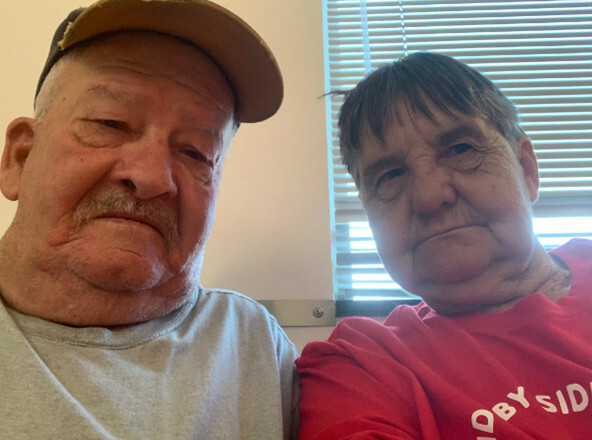
Ron and Debbie Hardy, longtime members of the GrandLOVE Kinship and Grandfamily Program, have opened their home to more than 300 foster children over their lifetime. Debbie reflects, “We know it was more than 300, but that’s the closest number we can come up with.”
Today, as mentors within GrandLOVE, they share their time and wisdom from being foster parents with other kin caregivers in the group, helping them feel strengthened, supported, and connected to a community that understands. Other families often describe the Hardys’ presence as a source of hope and encouragement, showing the power of lived experience in building resilience.
What They’ve Learned
- Families thrive when they guide their own program content, not when it’s imposed.
- Relationship-building is essential: trust comes first, services follow.
- Food is a connector—family nights foster trust, joy, and healthy habits.
- Strengths-based approaches empower caregivers who often feel guilt and isolation.
- It’s okay to not have everything figured out.
- Assist caregivers in reducing stress.
- Building trust is essential.
One staff member reflected:
Get them there once and make them feel loved and appreciated, and you’ll get them coming back.
Together, these lessons show that the greatest impact comes from building trust, celebrating strengths, and letting families shape the path forward.
Results & Replication
Evaluation
GrandLOVE conducts ongoing, informal evaluations through open discussions at the end of each meeting, allowing families to reflect and guide future programming.
Replication Potential
- Launch school-based kinship support groups.
- Host family cooking nights using the Plan, Eat, Move curriculum.
- Center programming on strengths-based, family-guided approaches.
- Mobilize community resources for emergency housing and furniture.
This spotlight is part of a national series celebrating innovation in Family Resource Centers serving kinship/grandfamilies. To learn more about how Family Resource Centers support kinship/grandfamilies, see Family Resource Center Services and Supports for Kinship/ Grandfamilies, a resource created by the National Family Support Network and the Grandfamilies & Kinship Support Network.