Toolkit
Root Cause Analysis, Change Theory, and Logic Models
Download This Resource

Would you like to start a program that is efficient with dollars and staff time while meeting community needs? While root cause analyses, change theories, and logic models cannot guarantee a successful program, they can increase its likelihood. This resource explains what those tools are, how they can help, and how to use them.
What is Root Cause Analysis?
Let’s say your community needs assessment (see Topic 2) indicates that many kin caregivers in your community report persistent, high levels of stress. Your supervisor suggests starting a support group, reasoning that it will give kin caregivers the opportunity to share their worries and receive mutual support from their peers, thereby relieving their stress. You and your team find space for the group, hire a facilitator, post fliers, and buy food for the first meeting. The only problem: no one comes. Later, you learn that the kin caregivers in your community don’t have time or are too tired to come to the meetings because they work multiple jobs to make ends meet. What’s more, you learn that they’re working multiple jobs because they can’t afford basic necessities on just one income. It is only after you’ve spent time and money on planning the support group that you and your supervisor realize the reason kin caregivers in your community are stressed is because they’re worried about money.
Conducting a root cause analysis can help avoid this scenario. A root cause analysis offers the opportunity to consider whether the need you observe is the true cause of a problem or only a symptom.
How to Conduct a Root Cause Analysis
Sometimes an observed need is simply a symptom of a deeper issue. Treating the symptom will not resolve the issue, much like treating a medical symptom won’t cure a disease.
To conduct a root cause analysis, try to remember what it was like when you were a child and wanted to learn the reason behind everything. Why is the sky blue? Why do dogs bark?
Now, apply this to your observed need. For instance, the supervisor in the above scenario might have asked herself, “Why are kin caregivers in my community experiencing stress?” After brainstorming possibilities and reviewing the community needs assessment, she realizes that kin caregivers feel stressed because they are working multiple jobs. The supervisor might then ask herself, “Why are they working multiple jobs?” and so on. Use these tips from the University of Wisconsin at Madison to conduct your own root cause analysis.
What is a Change Theory?
A change theory (sometimes called “program logic”) describes the reasoning behind your intended intervention. It is based on evidence and explains why your intervention will successfully resolve the root cause of an observed need.
The evidence supporting your change theory might be derived from research, professional theory (e.g., cognitive-behavioral theory), or personal experience. Here’s a simple example: I’m bored. From my personal experience, I know that if I read a book, I will no longer be bored. Therefore, I will read a book so I will no longer be bored.
Bear in mind that change theories can have flaws and gaps. For instance (in the example above), if there’s been a power outage, and you cannot see the page to read, then pulling out a book won’t alleviate your boredom. However, implementing an intervention can provide the opportunity to test and (if necessary) refine a change theory and/or the chosen intervention.
How to Write a Change Theory
Use the model below to write your change theory
We observe that [need]

We think it’s because [root problem]
We plan to [service/intervention]
Which will result in [solution/outcomes]
Start by identifying an observed need, followed by its root cause. For example, you might observe that kin caregivers in your community report persistent, high levels of stress (this is the observed need to put in the first box). The root cause (box two) of their stress might be that they cannot afford to buy basic necessities.
Next, skip to the bottom box to choose your desired outcome. Thinking about your desired outcome before you decide on an intervention is important, because knowing what you want to accomplish will help you choose an appropriate intervention. For the given example, your desired outcome could be that the kin caregivers you serve can afford basic necessities.
Finally, go back to the third box and choose an intervention that addresses the root cause of the observed need and results in the desired outcome. Remember: your intervention must be based on evidence, which can be derived from research, professional theory (e.g., cognitive-behavioral theory), or even personal experience. The following example shows an intervention followed by two evidence examples: one based on experience, the other on professional theory.
Intervention: We will provide income assistance to kin caregivers in our community to help them afford basic necessities, thereby reducing their stress. We know this will work because…
· Evidence based on experience: …when we’ve helped other populations afford basic necessities, the intervention has reduced their stress.
· Evidence based on professional theory: …systems theory tells us that reducing any of our clients’ stressors will reduce their overall stress.
What is a Logic Model?
Whereas a change theory explains why an intervention will work, a logic model specifies how it will work.
Think of a logic model as a recipe. A recipe identifies ingredients (e.g., flour, eggs, etc.), instructions on how to process the ingredients (e.g., combine in a bowl, mix, bake, etc.), and the product that will be created after the process is complete (e.g., a cake).
A logic model also identifies ingredients but calls them inputs. For the scenario involving income assistance for our stressed kin caregivers, the inputs might include money, staff (to administer the program), materials (for applications), and so on.
The logic model helped us to think strategically about steps we would need to take in order to develop and implement programming. It also helped us to think through additional stakeholders that would need to be involved throughout the process.
Area Agency on Aging Professional
Instead of specifying instructions for how to process ingredients, a logic model describes activities (sometimes called “actions”). For the scenario above, these might include creating an application, interviewing kin caregivers, distributing money, etc.
Whereas a recipe creates a product like a cake, a logic model yields outputs. In the scenario above, these might be completed applications and cash in kin caregivers’ pockets.
Outputs vs. Outcomes
The difference between “outcomes” and “outputs” in logic models can be confusing. Think of “outcomes” as the intended goal of the intervention. They are what happens after a need is met.
“Outputs” are products (often concrete) of the intervention that may not directly relate to the “outcomes.” For example, if I offer 10 support group meetings to decrease social isolation among group participants, at the end of the intervention, I’ll have 10 completed support group meetings (the “output”) that may or may not have decreased social isolation among the participants (the intended “outcome”).
Unlike a recipe, a logic model also identifies needs (sometimes called “situation”) and outcomes (sometimes called “impact”). If our cake recipe used these terms, the situation might be that my children had a rough day and need a pick-me-up, and the outcome might be that after eating the cake, they’re happy.
In the kin caregiver scenario, the needs might refer to the kin caregivers’ stress and their inability to afford their basic necessities (note: the term “needs,” when used in a logic model, refers to both the root cause and needs identified by the change theory). The outcomes might be that kin caregivers now can afford their basic necessities, and their stress has been reduced.
How to Write a Logic Model
Create a simple logic model by following a similar format to the blank version below.

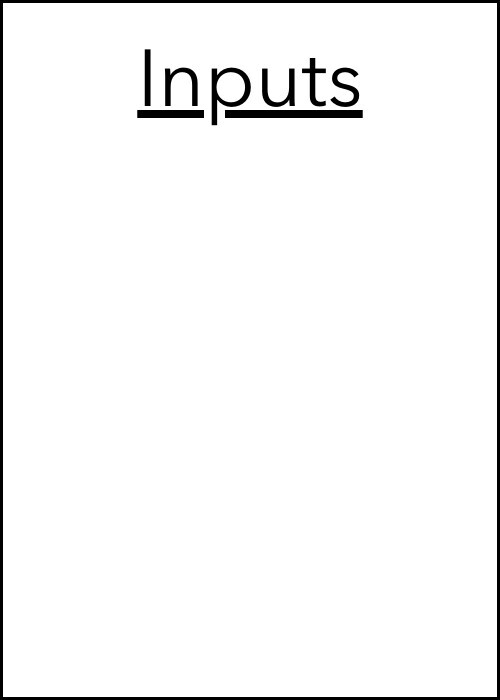



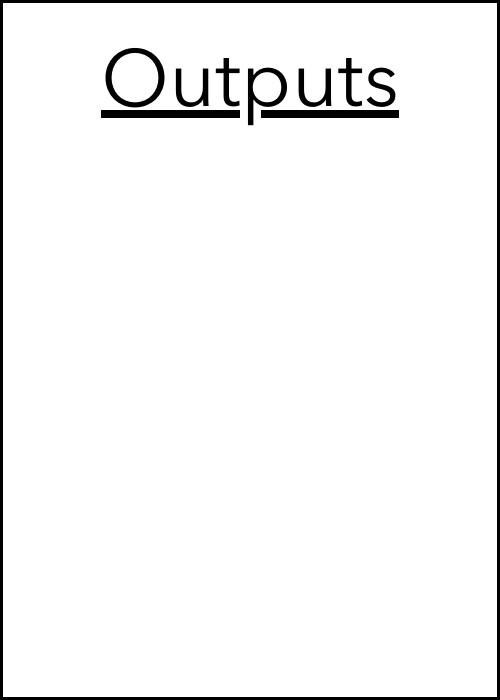
To write a more detailed logic model, consider adding priorities, assumptions, and external factors, like this model created by the University of Wisconsin at Madison.
Suggested Readings
Change Theory/Program Logic
- 3.2: What is Theory of Change?, from the University of Wisconsin at Madison’s Enhancing Program Performance with Logic Models
- How to Develop a Theory of Change and Logic Model for Your Kinship Navigator Program, from the Urban Institute, also available via the Grandfamilies & Kinship Support Network
- 15-minute Program logic (change theory) video on YouTube
Logic Models
- Enhancing Program Performance with Logic Models, from the University of Wisconsin at Madison
- How to Develop a Theory of Change and Logic Model for Your Kinship Navigator Program, from Urban Institute, also available via the Grandfamilies & Kinship Support Network
- Logic Model Guidance and Template, from the National Student Support Accelerator’s Toolkit for Tutoring Programs
- Section 3: Design A Program, chapter from the U.S. Department of State’s Program Design and Performance Management Toolkit (see pages 24-38)